Key Facts about Plant Cells
and Algae

Plant cells and microalgae are two of the most exciting platforms in modern biotechnology. Plant cell culture enables the sustainable, scalable production of complex secondary metabolites — compounds such as paclitaxel (Taxol®), shikonin, and ginsenoside that are difficult or impossible to produce by chemical synthesis. Beyond pharmaceuticals, plant cell culture is gaining traction in the food and flavour industry: cocoa and coffee cell cultures offer a path to producing aroma compounds and functional ingredients without depending on agricultural supply chains. Microalgae convert CO₂ and light directly into biomass, making algae cultivation in photobioreactors a compelling route to nutraceuticals, pigments, and biofuels.

Both organism groups share key characteristics that define how they need to be cultivated. Plant cells are large (20–200 µm) and enclosed by a rigid cellulose wall, making them significantly more sensitive to shear stress than microbial or mammalian cells. They grow slowly — batch durations of one to four weeks are typical — and their biosynthetic output depends directly on tight control of pH, dissolved oxygen, temperature, and nutrient supply. Microalgae add light as a critical parameter: photosynthetic growth requires defined irradiance and CO₂ supply, and photoinhibition must be actively avoided. Both groups can also be cultivated heterotrophically or mixotrophically, expanding the range of bioreactor strategies available.

These biological properties — shear sensitivity, slow growth, and the need for aseptic, precisely controlled conditions over extended cultivation periods — make bioreactor design critical. They drive the need for gentle mixing, accurate pH and DO control, defined temperature management, and for algae, integrated light supply. The Applikon autoclavable glass bioreactor are ideally suited for plant cell and algae bioreactor applications at small and lab scale, with a clear path to scale-up. 

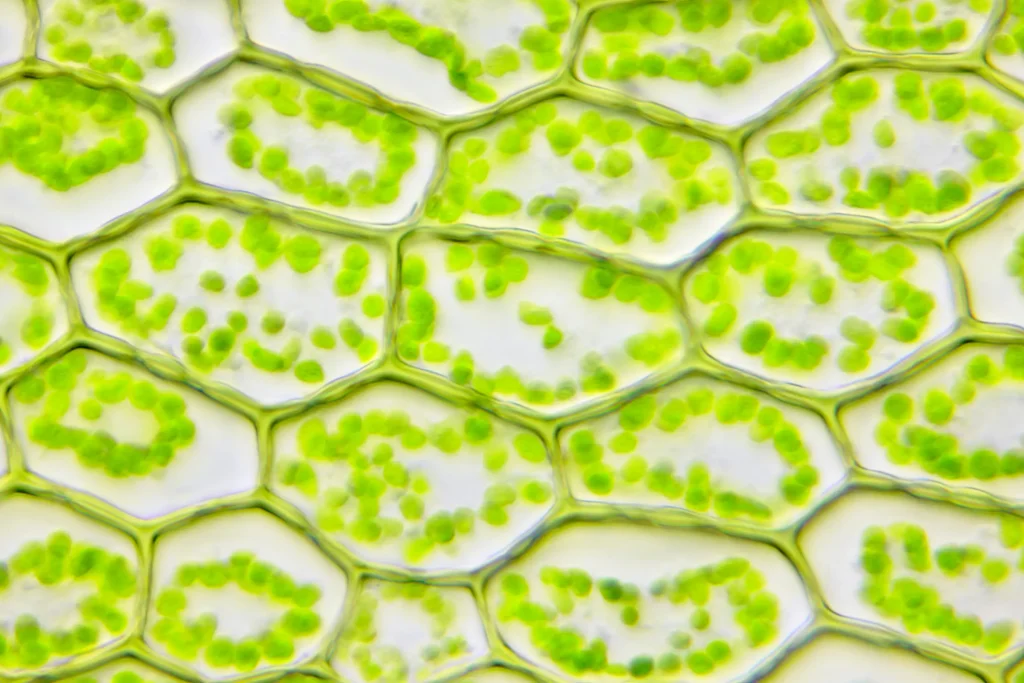
Plant Cells under a microscope

Key Parameters for Plant Cell and Algae Cultivations

Plant cells and microalgae demand precise, organism-specific control across all bioreactor formats — from MiniBio screening to stainless steel production systems.

  • pH

    Plant cells (5.5–6.0) / Microalgae (7.0–8.5)

    In-line pH control via acid/base addition for plant cells; automated CO₂ injection on pH demand for algae cultivation in bioreactors. Deviations directly affect growth rates and secondary metabolite accumulation. 

  • Dissolved oxygen (DO)

    Plant cells (10–40%) / Microalgae

    DO cascade control (agitation + aeration) is essential for plant cell culture. In algae photobioreactor cultivation, photosynthetically generated O₂ must be actively stripped to prevent inhibitory accumulation.

  • Temperature

    Plant cells (20–28°C) / Microalgae (20–35°C)

    Species-specific optimum; Chlorella ~25°C, Spirulina cultivation ~35°C. Temperature reduction in plant cell culture can enhance accumulation of target secondary metabolites.

  • Light intensity

    Microalgae (photobioreactor parameter)

    PAR 50–500 µmol m⁻² s⁻¹ depending on species. Light/dark cycles maximise photosynthetic efficiency. The transparent borosilicate glass of the Applikon autoclavable bioreactor supports external LED panel illumination for effective lab-scale photobioreactor operation. 

  • Shear stress

    Both plant cells and algae are highly shear-sensitive. Marine or pitched-blade impellers at low tip speeds (0.1–0.3 m/s) and microspargers are standard to ensure adequate mass transfer without cell damage.

  • Conductivity

    A key indicator of medium composition and osmotic balance. Monitoring conductivity enables early detection of nutrient depletion or salt accumulation — both of which directly impact cell viability and product yield in plant cell and algae cultures. In-line conductivity sensors support real-time process control without sampling.

  • Nutrient supply

    Plant cells require medium with sucrose, hormones, and elicitors to trigger secondary metabolite biosynthesis. Microalgae grow on inorganic salts (N, P, trace metals) with CO₂; nitrogen depletion shifts metabolism toward lipids, astaxanthin, or phycocyanin.

Standard Process Workflow for Plant Cell and Algae Cultivations

Both processes follow inoculation, growth/production, and harvest phases, adaptable to batch, fed-batch, or continuous mode.

Plant cell suspension culture

Four-stage process from explant selection to harvest, with elicitation as a critical productivity lever.

  1. Callus initiation & cell line selection

    Explant on MS/B5 medium; high-producing lines selected by metabolite screening.

  2. Aseptic inoculation

    Transfer to plant cell bioreactor at defined density; pH/DO/temperature cascade activated.

  3. Growth & elicitation phase

    Fed-batch nutrient supply; elicitor addition triggers secondary metabolite biosynthesis; packed cell volume (PCV) monitored. A key process challenge is the formation of cell aggregates: as plant cells clump together, mass transfer of oxygen and nutrients to the cell interior becomes limited, reducing productivity and complicating downstream processing. Aggregate size must be actively managed through impeller selection, agitation rate, and medium composition.

  4. Harvest

    Batch or semicontinuous; product extracted from biomass or recovered from medium.

Microalgae photobioreactor cultivation

Three-stage process leveraging axenic pre-culture, cascade control, and selective biomass recovery.

  1. Inoculation

    Axenic pre-culture to target OD; CO₂ sparging and illumination activated at transfer.

  2. Biomass growth & nutrient strategy

    Cascade control of DO/CO₂/pH/light; nitrogen depletion to boost lipids, astaxanthin, or phycocyanin.

  3. Harvest

    Batch or turbidostat mode; biomass recovered by centrifugation, filtration, or flocculation.

Bioreactor Types for Plant Cell and Algae Applications

All Applikon formats support plant cell and algae cultivation with tailored control strategies.

Type Scale Key Use Cases Plant Cell & Algae-Specific Features
Applikon MiniBio glass mini bioreactor 0.25–1 L Media & elicitor screening, strain selection, scale-down model Low volume reduces cost of plant hormones/elicitors; shear-optimised marine impeller; parallel operation; in-line pH/DO sensors
Applikon glass autoclavable bioreactors for plant cell and algae cultivation 2–20 L Plant cell suspension culture, secondary metabolite production, photobioreactor setup with external LED illumination, scale-up/scale-down model Transparent borosilicate glass enables external LED illumination — ideal as lab-scale photobioreactor for Chlorella, Spirulina, or Haematococcus cultivation; flexible pH/DO/temperature/light cascades; autoclavable; multiple sensor ports
AppliFlex ST single-use bioreactor for plant cell culture 0.5–15 L Recombinant plant proteins, biopharmaceuticals from plant cell culture, rapid process changeover Disposable vessels eliminate cross-contamination risk for valuable plant cell lines; pre-sterilised reactors; no autoclave cleaning validation required; standard pH/DO/Conductivity sensors
Stainless steel bioreactors for large-scale plant cell and algae production From 20 L to >10,000 L Industrial plant cell cultivation, large-scale microalgae biomass and biofuel production, CIP/SIP continuous processes Scalable to 5,000 L and beyond; CIP/SIP for long, sterile cultivation runs; robust pH/DO/Conductivity/Temperature cascade control
Capabilities

Cultivating Plant Cells and
Algae with Applikon Bioreactors

The Applikon glass lab scale bioreactor excels in providing a meticulously controlled environment essential for cultivating plant cells and algae. This advanced system ensures precise regulation of critical parameters such as temperature, pH, and gas exchange — key factors that drive photosynthesis and cellular metabolism.

By integrating these sophisticated features, the Applikon autoclavable glass bioreactor not only optimizes the growth conditions for plant cell and algae applications but also enhances the overall efficiency and yield of the cultivation process — making it an efficient tool for both research and commercial applications in biotechnology.
Step-by-Step

Detailed Process Guide for Plant Cell and Algae Culture

A structured approach to plant cell and algae bioprocessing ensures reproducibility and consistent yield — from initial inoculation through to commercial-scale production.

Advantages for Plant Cell and Algae
Cultivation

  • Scalability

    Scalability

    Provides a scalable solution from research-scale to commercial production, optimizing culture conditions before larger scale-up.

  • Versatility

    Versatility

    Suitable for a wide range of applications — from producing secondary metabolites and biopharmaceuticals using plant cell cultures to biofuel and high-value biochemical production with algae.

  • Control and Precision

    Control and Precision

    Advanced monitoring and control systems ensure that all environmental parameters can be finely tuned and maintained, resulting in higher yields and better-quality products.

  • Efficiency

    Efficiency

    Designed for ease of use and minimal maintenance, it maximizes productivity and reduces operational costs across both research and commercial-scale cultivation.

CTA Background

Looking for the Right Bioprocess Solution?

Our specialists support you throughout the entire bioprocess lifecycle — from system selection and application design to implementation, optimization, and long-term operation. We work closely with you to ensure reliable, compliant, and scalable solutions tailored to your requirements.

Talk to Our Experts
Contact Form EN

FAQ - Plant Cells and Algae

Applikon bioreactors support cultivation of a wide range of plant cell types — including callus and undifferentiated plant cell suspensions — as well as diverse algal strains. The system is suitable for both research applications and commercial-scale production of secondary metabolites, biopharmaceuticals, and biofuels.

Algae rely on CO₂ as their primary carbon source for photosynthesis. Proper gas exchange ensures a consistent supply of CO₂ while maintaining suitable oxygen levels to support aerobic respiration and prevent oxidative stress. The Applikon bioreactor allows fine-tuning of these parameters to meet the dynamic needs of algal culture

The Applikon autoclavable glass bioreactor provides a meticulously controlled environment with precise regulation of temperature, pH, and gas exchange. Its modular design supports a wide range of applications — from producing secondary metabolites and biopharmaceuticals to biofuel production — and scales from 2 L research-grade vessels up to commercial production volumes.

A balanced nutrient supply is critical for both plant cells and algae. This includes carbon sources (primarily CO₂ for algae), nitrogen, vitamins, and minerals. The Applikon bioreactor features sophisticated feeding systems that administer a precise mixture of these nutrients, maintaining optimal growth rates and metabolic efficiency throughout the culture process.

Yes. The Applikon autoclavable glass bioreactor provides a scalable solution from research-scale to commercial production, allowing researchers to optimize culture conditions at small scale before larger scale-up. Its consistent design and scalable control solutions simplify the transition from bench to pilot to full production.