Bioprocess Symposium «Passion for Bioprocessing» · 3 November 2026, Bern · free of charge Register ➜
pH control
(6.8–7.2)
Maintained via CO₂ sparging and base addition; deviations impact growth, titer, and glycosylation.
Bioprocess Symposium «Passion for Bioprocessing» · 3 November 2026, Bern · free of charge Register ➜
Bioprocess Symposium «Passion for Bioprocessing» · 3 November 2026, Bern · free of charge Register ➜

Mammalian cells are eukaryotic cells with a nucleus and complex organelles, and they are much more sensitive to their environment than microbial cells. They have a fragile plasma membrane and limited tolerance to shear stress, osmolarity shifts, and temperature changes, which makes controlled bioreactor conditions essential.
Many production cell lines such as CHO or some HEK293 variants can grow in suspension, while other mammalian cells remain adhesion-dependent and require a surface for growth. Mammalian cells perform human-like post-translational modifications, especially glycosylation, so parameters such as pH, temperature, nutrients, and metabolite levels directly influence product quality. Their metabolism often leads to lactate and ammonia formation, which must be managed through feeding and process control to maintain viability and high cell densities.
These properties are critical for designing bioreactors for mammalian cell culture and selecting suitable control strategies. And they explain the need for gentle mixing, tight pH and DO control, defined temperature profiles (including temperature shifts), and tailored feeding strategies in mammalian cell bioreactor processes, including intensified concepts such as high-density N-1 and perfusion.
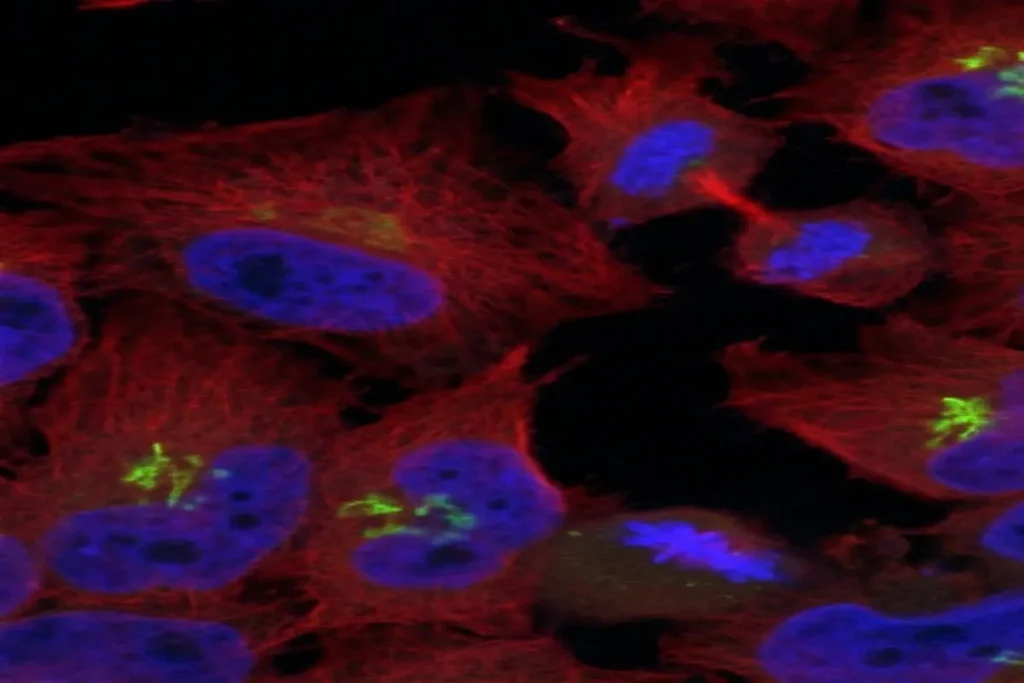
Mammalian cells (such as CHO, HEK293, Vero or NK‑92) are shear-sensitive and demand optimized conditions across all mammalian cell culture bioreactors, from small-scale bioreactors to production systems.
(6.8–7.2)
Maintained via CO₂ sparging and base addition; deviations impact growth, titer, and glycosylation.
(DO, 20–50%)
Regulated by gas mixing (air/O₂) and agitation; prevents hypoxia or oxidative stress.
(36–37°C)
With shifts (e.g., to 32–34°C) for growth-to-production transition and process intensification.
Low impeller speeds, Rushton or marine impellers, and bubble size control to avoid cell damage.
Glucose/glutamine feeds to limit lactate (>30 mM) and ammonia accumulation
Typical mammalian cell processes follow inoculation, growth/production, and harvest phases, adaptable to batch, fed-batch, or perfusion modes.
Inoculum preparation in shake flasks or bioreactors to provide the production inoculum.
Learn moreTransfer to bioreactor at controlled volume/density.
Cascade control of pH/DO/temperature; feeds for sustained viability.
Viable cell density (VCD), titer, metabolites via off-/at-line analytics.
Batch collection or continuous with cell retention (e.g., BioSep acoustic separator).
All Applikon formats support mammalian cells with tailored control strategies.
| Type | Scale | Key Use Cases | Mammalian-Specific Features |
|---|---|---|---|
| Applikon MiniBio glass small-scale bioreactor | 0.25–1 L | Process development, media screening, scale-down | Low volume for low media cost, shear-optimized setup, scalable, perfusion-ready |
| Applikon Autoclavable Glass bioreactors for mammalian cell culture | 2–20 L | Single-use bioreactor for small-scale mammalian cell culture, process optimization and scale-up/scale-down models | Multi-gas sparging options, multiple sensor options, flexible configruation, perfusion-ready |
| AppliFlex ST single‑use bioreactor for mammalian cells | 0.5–15 L | Small scale production, process optimization, scale-up /scale-down model | Disposable vessels, fast setup, reduced contamination risk, perfusion-ready |
| Stainless-steel bioreactors for large-scale mammalian cell culture and continuous perfusion | from 20L to 5000L | Repeated pilot or large-scale production runs | CIP/SIP, robust shear control, scalable, perfusion-ready |
Intensification boosts titer/volume-time via high-density cultures and efficiency gains.
Learn morePerfusion in small bioreactors for 15–30×10⁶ cells/mL inoculum, shortening production time by 2–3 days.
Learn moreCell retention (BioSep) for >100×10⁶ cells/mL, continuous harvest, stable productivity.
Learn moreReduce μ to boost specific productivity (qp) in fed-batch.
Learn moreMulti-stage for lactate control, supporting intensified fed-batch titers >10 g/L.
Learn moreMammalian cells have become the linchpin in the production of recombinant glycoproteins — hormones, enzymes, cytokines, and antibodies that play pivotal roles in human therapy. Their ability to produce proteins with glycosylation profiles closely mirroring natural human proteins makes them the preferred expression system for recombinant proteins intended for clinical use.
The demand for these therapeutic proteins is on an upward trajectory, driven by newer products — including antibodies and receptor-binding proteins — that often require higher doses. This creates a continuous need to enhance the productivity of mammalian cell culture bioreactors without significant additional equipment investment.
Hormones, enzymes, cytokines, antibodies with human-like glycosylation
Closest match to natural human post-translational modifications
Higher-dose products driving need for enhanced bioreactor productivity
Each stage of producing mammalian cell culture in a bioreactor is crucial for optimizing cell growth and product yield. Applikon bioreactors are designed to cater to the intricate needs of mammalian cells, providing an ideal environment for their proliferation and production of biologics.
Before culturing begins, the bioreactor must be thoroughly cleaned to remove residues from previous cultures. Autoclaving or in-situ sterilization ensures all components in contact with the culture are sterile, eliminating any risk of microbial contamination. Maintaining a sterile environment is critical for the purity and integrity of the mammalian cell culture.
CHO cells undergo a careful adaptation process to acclimate to the specific media and bioreactor conditions. Following adaptation, cells are expanded in flasks or smaller bioreactors to reach the required inoculum density. The prepared cell suspension is then aseptically transferred into the sterile bioreactor environment, where advanced control systems immediately begin regulating temperature, pH, and dissolved oxygen for optimal growth.
Mammalian cells require a continuous supply of nutrients and the removal of metabolic waste to maintain growth and productivity. Efficient feeding strategies and waste removal systems support these needs, preventing the accumulation of toxic metabolites such as lactate and ammonia that could hinder cell growth and product formation.
Harvesting is initiated when the culture achieves predetermined benchmarks of cell density and product concentration. Separation techniques include centrifugation, microfiltration/ultrafiltration, and depth filtration. The recovered supernatant then undergoes further purification through chromatography (affinity, ion exchange, size exclusion) and additional filtration to achieve the required purity standards.
Throughout harvesting and product recovery, samples are continuously tested for quality parameters including purity, potency, and the presence of contaminants. These quality control measures ensure the product meets all regulatory requirements and standards for biopharmaceuticals.
Comparison of Vero cell growth curves in Applikon single-use vs. conventional glass bioreactors for viral vaccine production. Demonstrates equivalent performance for EV71_C4 virus propagation.
Scale-down model validation for therapeutic molecule screening — ensuring product quality and process performance attributes are maintained across scales.
Development of cost-effective large-scale manufacture of clinical-grade NK-92 cells for anti-cancer immunotherapy, replacing static culture techniques.

Our specialists support you throughout the entire bioprocess lifecycle — from system selection and application design to implementation, optimization, and long-term operation. We work closely with you to ensure reliable, compliant, and scalable solutions tailored to your requirements.
Reach out to discuss innovative approaches for your project.
Mammalian cells are eukaryotic cells with a nucleus and complex organelles. They can perform human-like post-translational modifications such as glycosylation, making them the preferred choice for producing therapeutic proteins that require biological activity in humans.
Mammalian cells have a fragile plasma membrane and react sensitively to shear stress, osmolarity shifts, and temperature changes. Unlike bacteria or yeast, they tolerate only narrow process windows — making precise environmental control essential throughout cultivation.
Mammalian cell metabolism typically leads to the formation of lactate and ammonia. If these accumulate beyond certain thresholds, they impair cell growth, viability, and product quality — particularly the glycosylation pattern of therapeutic proteins.
The choice depends on scale and process stage. For process development and media screening, the Applikon MiniBio (0.25–1 L) offers a cost-effective, perfusion-ready setup ideal for CHO and HEK293 cells. For small-scale production and scale-up, the AppliFlex ST single-use bioreactor (0.5–15 L) reduces contamination risk with disposable vessels. For large-scale or repeated GMP production runs, stainless-steel bioreactors from 20 L to 5,000 L provide CIP/SIP capability and robust shear control. All formats are controlled via the Livit Flex bioprocess controller.
Perfusion is a continuous bioprocess mode where fresh media is constantly supplied while spent media and metabolic waste are removed, retaining the cells inside the bioreactor using a cell retention device such as the BioSep acoustic separator. This allows cell densities exceeding 100×10⁶ cells/mL — far beyond what standard fed-batch processes achieve — enabling higher productivity per bioreactor volume, lower media consumption per unit of product, and a continuous harvest stream. All Applikon bioreactor formats at Resea Biotec are perfusion-ready, from the MiniBio through to large-scale stainless-steel systems.


