Key Facts about Stem Cells
Stem cells are undifferentiated cells with two defining properties: self-renewal and the ability to differentiate into specialized cell types. This makes them highly relevant for stem cell cultivation, regenerative medicine, cell therapy research, and disease modeling. Because stem cells are highly sensitive to their microenvironment, cultivation in a controlled environment is essential to preserve viability, pluripotency, and differentiation potential. In bioreactor-based stem cell cultivation, even small process deviations can affect expansion efficiency, phenotype stability, and lineage commitment.
Stem cells are used in basic research, translational workflows, and advanced regenerative medicine applications. Depending on the cell type and application, processes may require maintenance of pluripotency, controlled expansion, or guided differentiation under defined bioprocess conditions.
In practice, bioreactor-based stem cell cultivation translates these requirements into tightly controlled processes spanning pH, dissolved oxygen, temperature, agitation, and feeding strategy — all selected to either preserve a defined stem cell state or to guide controlled differentiation. The same Applikon platform supports both modalities: cells can be the therapeutic product (e.g. stem cell therapy, CAR-T) or used to produce secreted products such as exosomes or cytokines, and processes can scale from bench-top development through GMP and non-GMP clinical workflows.

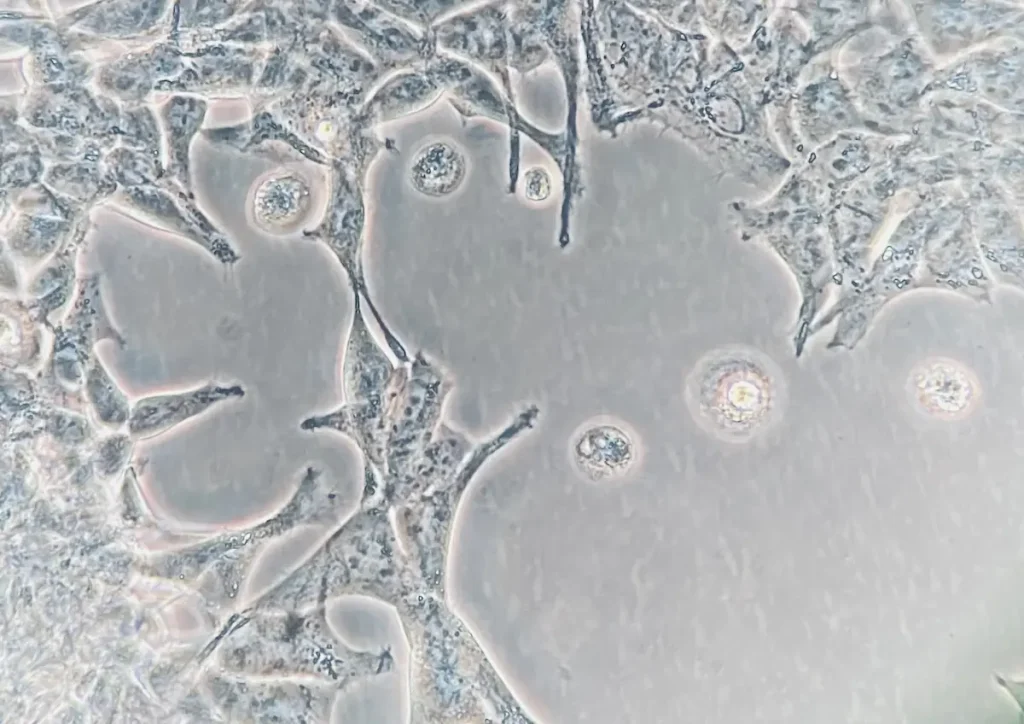
Key Parameters for Stem Cell Cultivations
Stem cells are highly sensitive to process conditions, and defined control of pH, oxygen, temperature, and mechanical stress is critical for reproducible stem cell cultivation in bioreactors.
pH
(typically 7.0–7.4)
Stem cells are generally maintained close to physiological pH. Stable pH control supports cell growth, viability, and phenotype stability, while pH shifts can affect metabolism and differentiation behavior.
Dissolved oxygen
(DO, 20–30% air saturation)
Many stem cell workflows use a moderate DO setpoint to balance oxygen supply and cell health. Controlled DO helps support reproducible stem cell cultivation, especially in bioreactor-based processes where oxygen transfer must be tightly regulated.
Temperature
(37°C)
Stem cells are typically cultivated at 37°C. Stable temperature control is essential for preserving cell health and process reproducibility, while short excursions can negatively affect culture performance.
Shear stress
(as low as possible)
Stem cells are delicate and should be exposed to gentle mixing conditions. Excessive shear can impair viability, damage aggregates, and alter phenotype, especially in suspension or aggregate-based cultures.
Agitation and mixing profile
Agitation must ensure homogeneous nutrient and gas distribution without creating unnecessary mechanical stress. Impeller design, stirring speed, and vessel geometry should be selected to support controlled stem cell expansion.
Nutrient supply and metabolite control
Glucose, amino acids, lactate, and ammonia should be monitored closely. A suitable feeding strategy helps maintain stable growth, support scalable stem cell expansion, and prevent process drift.
Cell density and aggregate size
In aggregate-based or suspension stem cell cultures, density and aggregate size influence mass transfer, metabolic balance, and differentiation behavior. Keeping these parameters controlled is key for reproducible stem cell cultivation and downstream process consistency.
Standard Process Workflow for Stem Cell Cultivations
Stem cell cultivation in bioreactors follows a defined sequence from cell thawing through harvest, adaptable to batch, fed-batch, perfusion, or scale-up/scale-down strategies depending on the application and cell type.
Cell thawing and recovery
The process begins with thawing a qualified cell bank and recovering the cells under gentle conditions. Early handling is critical to minimize stress and maintain viability.
Seed train expansion
Cells are expanded stepwise to reach the required inoculum density. This stage often benefits from controlled low-volume systems like the Applikon AppliFlex ST bioreactor and reproducible environmental conditions.
Bioreactor inoculation
The culture is transferred into the selected bioreactor under defined conditions. Inoculation density, medium composition, pH, DO setpoint, and agitation are adjusted to match the specific stem cell workflow.
Controlled cultivation phase
During cultivation, pH, dissolved oxygen, temperature, agitation, and feeding are maintained within target ranges to prevent unwanted differentiation and preserve the desired stem cell state. Real-time monitoring supports stable stem cell cultivation in bioreactors.
In-process analytics
Cell count, viability, metabolite levels, morphology, and marker expression are monitored throughout the run. Depending on the application, this may also include pluripotency or differentiation-related readouts.
Harvest or downstream transfer
Processing depends on the therapeutic output: when cells are the product (e.g., stem cell therapy, CAR-T), they are harvested for further processing, quality control, formulation, or cryopreservation. When cells produce a product (e.g., recombinant proteins, exosomes, cytokines), the culture supernatant containing the secreted product is harvested while cells may be discarded or recycled.
Bioreactor Types for Stem Cell Applications
All Applikon formats support stem cell cultivation with tailored control strategies — from small-scale process development through clinical and commercial manufacturing.
| Type | Scale | Key Use Cases | Stem Cell-Specific Features |
|---|---|---|---|
| Applikon MiniBio glass small-scale bioreactor | 0.25–1 L | Process development, media screening, scale-down studies | Low volume for low media cost, shear-optimized setup, scalable stem cell expansion, perfusion-ready |
| Applikon autoclavable glass bioreactors for stem cell cultivation | 2–20 L | Flexible R&D, process characterization, scale-up/scale-down models, optimization of suspension or aggregate cultures | Multiple sparging options, multiple sensor options, flexible configuration, perfusion-ready for controlled stem cell cultivation |
| AppliFlex ST single-use bioreactor for stem cells | 0.5–15 L | Small-scale production, process optimization, scale-up / scale-out / scale-down model | Disposable vessels enable process transition from research to clinical production; fast setup; no contamination or cross-contamination risk; perfusion-ready; supports both GMP and non-GMP workflows |
| Stainless steel bioreactors for large-scale stem cell production | From 20 L to 5,000 L | Larger-scale production, translational workflows, process intensification | CIP/SIP, robust shear control, scalable, perfusion-ready for cell therapy manufacturing |
Harnessing Stem Cell Potential with Applikon Bioreactors
Although the trend of cultivating stem cells leads towards suspension cultures, microcarriers are still widely used. Microcarriers help to increase the surface area for cell culture, allowing for higher cell densities and more efficient bioprocessing.
Detailed Process Guide for Stem Cell Culture
A structured approach to stem cell bioprocessing ensures reproducibility and consistent product quality — from initial seeding through to scalable expansion for research and therapeutic applications.
Stem cells — whether embryonic or adult-derived — are introduced into the sterile Applikon bioreactor, ensuring a contamination-free start. The culture medium, enriched with essential nutrients and growth factors, is carefully prepared to mimic the natural microenvironment of the stem cells. This step is critical to maintain the pluripotency and viability of the stem cells.
The Applikon glass and single-use bioreactor excels in creating and maintaining an optimal growth environment through its advanced control systems. Parameters including temperature, pH, and dissolved oxygen are meticulously regulated to meet the specific requirements of stem cell cultures — essential to prevent unwanted differentiation and preserve the pluripotent state.
Continuous monitoring is a cornerstone of successful stem cell cultivation. Equipped with real-time sensors and feedback mechanisms, the bioreactor ensures culture conditions are always within optimal ranges. Adjustments are made automatically, reducing manual intervention and minimizing human error — ensuring the consistency and reproducibility of stem cell batches.
The bioreactor facilitates a scalable platform for stem cell expansion, enabling researchers and biotechnologists to produce larger quantities of stem cells. By providing a controlled, reproducible environment, the bioreactor ensures that expanded stem cells retain their characteristic properties — crucial for research validity and therapeutic efficacy.
