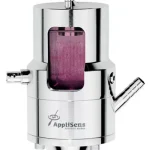
Inside the Applikon autoclavable Glass Bioreactor.
The Applikon Autoclavable Glas Bioreactor is a high-quality stirred-tank bioreactor designed for lab-scale fermentation and cell-culture applications. Built around modularity from the ground up, the Glas Bioreactor delivers reliable, reproducible results across the full spectrum of research and process-development work — from screening studies and media optimization through to process characterisation and the first steps of scale-up. It supports microbial and mammalian-cell cultivation across Batch, Fed-Batch, Perfusion and Continuous modes — and adapts to evolving research demands without requiring a new vessel platform.
Built with Excellence and Experience.
The Applikon Autoclavable Glass Bioreactor is engineered by Applikon, the worldwide reference in bioprocess instrumentation, with decades of field-proven experience supplying universities, biotech start-ups and biopharmaceutical organisations across the globe. Every Glass reactor is built with exceptional care from premium components — all metal parts in stainless steel 316L with an external electropolished mirror finish that simplifies cleaning and ensures long-term reliability, and no welded parts in the head plate to keep sterilisation straightforward. The borosilicate-glass dished-bottom vessels guarantee resistance to thermal shock, excellent corrosion resistance, a smooth non-porous surface for easy cleaning and optimal transparency for visual culture inspection.
Ease of Setup with Advanced Process Control.
The Glass Bioreactor is designed for straightforward setup and easy handling. The vessels are autoclavable at up to 130 °C and operable at up to 0.5 bar overpressure, with a standard stirrer speed range of 50–1250 rpm — and an optional 2000 rpm motor available for the 2 L and 3 L vessels. Both jacketed and single-wall versions are available across all volumes (the 20 L is single-wall only), and temperature control runs through a heating blanket, water heating or cooling/heating jacket as required. Drive systems can be specified as lipsealed or magnetically coupled, and the head plate accepts Rushton and marine impellers in 45, 60, 75 or 85 mm outside diameters.
The Autoclavable Glas Bioreactor accepts autoclavable 12 mm sensors with full support for AppliSens, Hamilton, Mettler Toledo, BlueSens and ABER sensor families — covering pH, dissolved oxygen, temperature, biomass, off-gas analysis and more. Process control runs through any of four Applikon platforms — Livit Flex, ez2Control, my-Control or in-Control — and integrates seamlessly with Lucullus PIMS process management software for advanced data acquisition and bioprocess analytics.
Available Glass Bioreactor Volumes:
The Autoclavable Glas Bioreactor range spans six vessel sizes to match every lab-scale workflow. Working volumes are continuous from 0.3 L through to 16 L.
- 1 Glas Bioreactor 2 L — working volume 0.3–1.7 L
- 2 Glas Bioreactor 3 L — working volume 0.6–2.4 L
- 3 Glas Bioreactor 5 L — working volume 0.9–3.4 L
- 4 Glas Bioreactor 7 L — working volume 1.5–5.4 L
- 5 Glas Bioreactor 15 L — working volume 3–12 L
- 6 Glas Bioreactor 20 L — working volume 3–16 L
| Attributes | Autoclavable Glass Bioreactor 2L | Autoclavable Glass Bioreactor 3L | Autoclavable Glass Bioreactor 5L | Autoclavable Glass Bioreactor 7L | Autoclavable Glass Bioreactor 15L | Autoclavable Glass Bioreactor 20L |
|---|---|---|---|---|---|---|
| L1 – Core Physical & Construction | ||||||
| Volume | 2 L | 3 L | 5 L | 7 L | 15 L | 20 L |
| Working volume range | 0.3 –1.7 L | 0.6 –2.4 L | 0.9 –3.4 L | 1.5 –5.4 L | 3 –12 L | 3 –16 L |
| Total volume | 2.2 L | 3.1 L | 4.8 L | 6.8 L | 16.5 L | 23 L |
| Wall Type | Single Wall or Jacketed | Single Wall or Jacketed | Single Wall or Jacketed | Single Wall or Jacketed | Single Wall or Jacketed | Single Wall |
| Max operating temperature | 65 °C | 65 °C | 60 °C | 60 °C | 55 °C | 50 °C |
| Compatible motor types | Stepper motor M02.2 / Brushless Motor M10 | Stepper motor M02.2 / Brushless Motor M10 | Brushless Motor M10 / M20 | Brushless Motor M10 / M20 | Brushless Motor M14 / M33 | Brushless Motor M14 / M33 |
| Aspect ratio working volume | 1.9 : 1 | 1.5 : 1 | 1.1 : 1 | 1.8 : 1 | 1.5 : 1 | 2 : 1 |
| Aspect ratio total volume | 2.3 : 1 | 1.9 : 1 | 1.6 : 1 | 2.5 : 1 | 1.7 : 1 | 2.4 : 1 |
| L2 – System Properties & Process Parameters | ||||||
| Bacterial Culture | 7/h | 8/h | 7/h | 12/h | 16/h | 16/h |
| Mammalian Cell Culture | 1/h | 1/h | 1/h | 2/h | 3/h | 4/h |
| Mixing Time Tm (sec) | 1.6 / 0.2 | 3.2 / 0.4 | 2.8 / 0.3 | 3.4 / 0.4 | 3.4 / 0.4 | 4.3 / 0.5 |
| Max tip speed (m/s) | 1.77 / 3.53 | 1.77 / 3.53 | 2.83 / 3.93 | 2.83 / 3.93 | 3.92 / 2.95 | 3.92 / 2.95 |
| Motor torque | 0.24 Nm | 0.24 Nm | 0.24 Nm / 0.4 Nm | 0.24 Nm / 0.4 Nm | 0.92 Nm / 2.43 Nm | 0.92 Nm / 2.43 Nm |
| Impeller Power no. Np | 1.5 / 2 x 6 | 1.5 / 2 x 6 | 1.5 / 2 x 6 | 1.5 / 3 x 6 | 1.5 / 3 x 6 | 1.5 / 3 x 6 |
| L3 – Functional & System Capabilities | ||||||
| Scale transfer support | Yes / Interchangeable with Single-Use | Yes / Interchangeable with Single-Use | Yes | Yes | Yes / Interchangeable with Single-Use | Yes |
| Head plate ports | 16 | 18 | 19 | 19 | 19 | 19 |
| Harvest port | Drain pipe | Drain pipe | Drain pipe | Drain pipe | Various options | Drain pipe |
| Number of sensor / condenser ports | 5 | 5 | 5 | 5 | 6 | 6 |
| Cell Type | Cell Culture and Microbial |
| Technology Platform | Multi-Use |
| Material | Glass |
| Autoclavable | Yes |
| SIP / CIP capability | No |
| Max sterilization temperature | 130 °C |
| Max operating pressure | 0.5 bar |
| Drive system | Direct drive (magnetic) / lipsealed |
| Gas sparger types | Porous sparger / L-type sparger |
| Heating method | Heating Blanket / Water heating |
| Supported sensor types | Autoclavable 12 mm sensors / Various options |
| Sampling port | Fixed sample pipe / Height adjustable sample pipe |
| Geometric similarity maintained | Yes |
| GMP-ready configuration available | Yes |
| Platform scalability range | 2L – 20L |
| IQ/OQ/PQ support | Yes |
| Recommended service interval | 12 months |
| Warranty period | 12 months |
| Lead time | Approx. 9 – 12 weeks |
| Validation documentation available | Yes |
Research & Process Development
The Glass Autoclavable Bioreactor is purpose-built for lab-scale research and process development. Its borosilicate glass vessels provide full visual transparency for real-time culture monitoring, while precise control of pH, DO, temperature, and agitation across Batch, Fed-Batch, Perfusion, and Continuous modes makes it the ideal system for establishing and refining bioprocesses at the earliest stage.
Screening & Optimization
With working volumes from 0.3 L to 16 L across six vessel sizes, the Glass Autoclavable Bioreactor is well suited for systematic evaluation of media formulations, feeding strategies, and process parameters at minimal scale. Its modular, interchangeable architecture allows rapid reconfiguration between experiments — keeping costs and material consumption low during intensive optimization phases.
Scale-Up
The Glass Autoclavable Bioreactor serves as the starting point for scale-up workflows that continue into the Applikon stainless steel series. Geometric similarity across platforms and interchangeability with Single-Use bioreactor systems provide flexible pathways for transferring established processes to larger scales — whether through glass, single-use, or stainless steel.
GMP Transition
Available with a GMP-ready configuration, IQ/OQ/PQ support, and full validation documentation, the Glass Autoclavable Bioreactor can serve as the initial development platform before transitioning a process into regulated manufacturing. Its standardized construction and consistent sensor compatibility with downstream platforms simplify the documentation requirements of the GMP bridging phase.
Compatible controllers
- Applikon Livit Flex Bioprocess Controller The Applikon Livit Flex is the next generation of bioprocess control systems — c…
- Applikon my-Control Bioreactor Controller The Applikon my-Control is the most advanced bioreactor controller for small-sca…
- Applikon in-Control Bioreactor Controller The Applikon in-Control is a process controller for laboratory scale bioreactors…
Compatible software
Compatible Sensors
- AppliSens DO₂-Sensor
- AppliSens LumiSens Optical DO₂ Sensor
- AppliSens pH-Sensor
- AppliSens Smart DO₂ Sensor
- AppliSens Smart pH Sensor
- Hamilton CO₂NTROL Arc Sensor
- Hamilton Dencytee Arc The Hamilton Dencytee ARC is an intelligent optical sensor for total cell densit…
- Hamilton EasyFerm Plus Arc
- Hamilton Incyte Arc Intelligent capacitance sensor for real-time viable cell density (VCD) measureme…
- Hamilton VisiFerm DO₂ Arc Sensor
- Repligen MAVEN Glucose and Lactate Sensor
Microbials
In the field of industrial microbiology, the cultivation of microorganisms through bioreactor fermentation stands as a cornerstone technique for producing a broad spectrum of microbial products, from antibiotics, biofuels to food and beverages
Learn MoreMammalian Cells
Mammalian cells have become the linchpin in the production of recombinant glycoproteins such as hormones, enzymes, cytokines, and antibodies, all of which play pivotal roles in human therapy.
Learn MoreStem Cells
Stem cells represent a pioneering achievement in biomedical research and therapy, offering unprecedented opportunities for regenerative medicine, including tissue engineering and the treatment of various diseases.
Learn MorePlant Cells and Algae
At the forefront of sustainable biotechnology, the cultivation of plant cells and algae within bioreactors presents a revolutionary approach to producing valuable biochemicals, pharmaceuticals, and biofuels
Learn MoreInsect Cells
In the rapidly evolving landscape of biotechnology, the Baculovirus Expression Vector System (BEVS) with insect cells stands out as a versatile and powerful tool for protein production.
Learn More
Cellular Agriculture
Cellular agriculture represents a groundbreaking shift in food production, centering around the concept of cellular food solutions. This innovative field harnesses biotechnology to cultivate animal and plant cells for food, directly in a controlled environment, bypassing traditional farming methods.
Learn MoreBiotherapeutics
Discover biologicals, where innovation meets healthcare to revolutionize treatment methodologies and patient care. Biotherapeutics include a broad range of biologically derived products, such as monoclonal antibodies (mABs), viral vectors, and vaccines, each playing a pivotal role in targeted disease treatment and prevention.
Learn MoreCell and Gene Therapy
Cell and gene therapy is revolutionizing modern medicine. For the safe development and manufacturing of these therapies, Resea Biotec bioreactors provide the ideal controlled environment, guaranteeing precision, scalability, and efficiency in the production process.
Learn More
Modular by design — built to evolve with your research.
The Glas Bioreactor’s defining feature is modularity. Interchangeable head-plate modules, swappable impeller and sparger configurations, and adjustable sample-pipe geometry mean the same vessel platform can be reconfigured to handle a sequence of distinct research questions — without replacing the system, the vessel or the controller. As your bioprocess evolves from initial strain screening through media optimization to feeding-strategy development and process characterisation, the Applikon Glas Reactor evolves with it.
For research teams under cost discipline, the impact is structural: a single Glass stirred-tank reactor can serve a multi-year research programme instead of being replaced as needs change. The modular approach reduces total cost of ownership and lowers the initial investment threshold — making the Applikon Glas Bioreactor the most accessible entry point into Applikon-grade bioreactor instrumentation for university labs, biotech start-ups and contract development organisations alike.

Borosilicate glass and stainless steel — built to last.
Material choice is what makes the Applikon Glass Bioreactor a multi-year platform rather than a consumable. The borosilicate-glass dished-bottom vessels combine excellent chemical inertness with the optical clarity bioprocess teams need for real-time visual inspection — letting operators spot foaming, settling or aggregation issues without instrumentation. 316L stainless steel in every metal part of the head plate, with an electropolished mirror finish outside, makes routine cleaning straightforward and resists pitting and corrosion across the full pH range encountered in cell-culture and microbial work.
The combination of borosilicate glass and 316L steel is what allows the Glass Stirred Bioreactor to be autoclaved repeatedly at 130 °C without degradation across years of use — turning sterilisation from a wear-and-tear cost into a routine operational step. The same materials carry the platform through Batch, Fed-Batch, Perfusion and Continuous cultivation, across microbial fermentation, mammalian cell culture, stem-cell expansion and regenerative medicine work — so the vessel that runs a screening study at the start of a programme is the same vessel that runs process characterisation two years later, on a different cell line, in a different mode.

What is the Applikon Glass Bioreactor workflow?
The Applikon Glass Bioreactor workflow runs on a single platform across three phases.
Configure. Specify your vessel at order time: size (2 L through 20 L), wall type (single-wall or jacketed), drive system (lipsealed or magnetically coupled), motor (standard or high-rpm), impeller geometry, sparger type, sample-pipe configuration and sensor format. Resea Biotec’s specialists work through the configuration with you to match the vessel exactly to your application.
Run and adapt. Autoclave the vessel, mount it on the stand, connect to your Livit Flex, my-Control or in-Control controller and run. As research demands evolve, swap interchangeable modules — different impellers, alternative sparger types, modified sample-line geometry — without replacing the system. Each reconfiguration is a routine module swap, not a procurement cycle.
Transfer. When the protocol locks and the process is ready for scale-up, geometric similarity with Applikon’s stainless steel BioBench and BioPilot platforms — and interchangeability with the AppliFlex ST single-use range — provides clean transfer pathways. Process parameters established on the Applikon Autoclavable Glass Bioreactor translate cleanly onward, whether the next stage is glass, single-use or stainless.
Why use the Applikon Glass Bioreactor?
- Modular by design — interchangeable head-plate modules let one vessel platform serve a multi-year research programme.
- Six vessel sizes, two wall types — 2 L to 20 L, single-wall or jacketed, sized to your protocol from the first run.
- Borosilicate glass + 316L steel — built for repeated 130 °C autoclaving and full visual culture inspection.
- Full Applikon controller compatibility — Livit Flex, ez2Control, my-Control and in-Control, with Lucullus PIMS integration.
Spec your Applikon Glass Bioreactor with Resea Biotec.
The Applikon Autoclavable Glass Bioreactor is a modular stirred-tank platform, available in 2 L, 3 L, 5 L, 7 L, 15 L and 20 L vessels with working volumes from 0.3 L to 16 L — built on borosilicate glass and 316L stainless steel for years of reliable lab-scale bioprocessing. Full compatibility with the Livit Flex, ez2Control, my-Control and in-Control platforms and seamless Lucullus PIMS integration make it the most flexible autoclavable glass bioreactor on the market.
Process parameters you lock on the Applikon Autoclavable Glass Bioreactor transfer cleanly upward through the Applikon family, all the way to pilot and production. Resea Biotec is Switzerland’s official Applikon distributor and certified service partner — based in Recherswil, supporting customers across Switzerland with local support and on-site service.
Talk to our team and we’ll spec the right bioreactor configuration for your bioprocess, coordinate IQ/OQ/PQ documentation where required, and stay on hand for application advice, training and maintenance throughout the system’s life. Whether you’re characterising a new cell line, optimising a fermentation, or preparing process transfer to pilot scale — we’ll help you get there.

Applikon Glass Bioreactor Documentation
Download the official Applikon Glass Bioreactor brochure and technical documents.
Applikon Glass Autoclavables Brochure
Full technical specifications and customisation options for the Applikon glass Bioreactor range.
Applikon Multi-use Bioreactor Range — Datasheet
Complete specifications for the Applikon glass autoclavable bioreactor range — 250 mL to 20 L vessels, single-wall and jacketed variants, with impeller, sparger, sensor and control options for cell culture and microbial work.