AppliSens DO₂ Sensor – Polarographic Dissolved Oxygen Sensor for Bioreactors

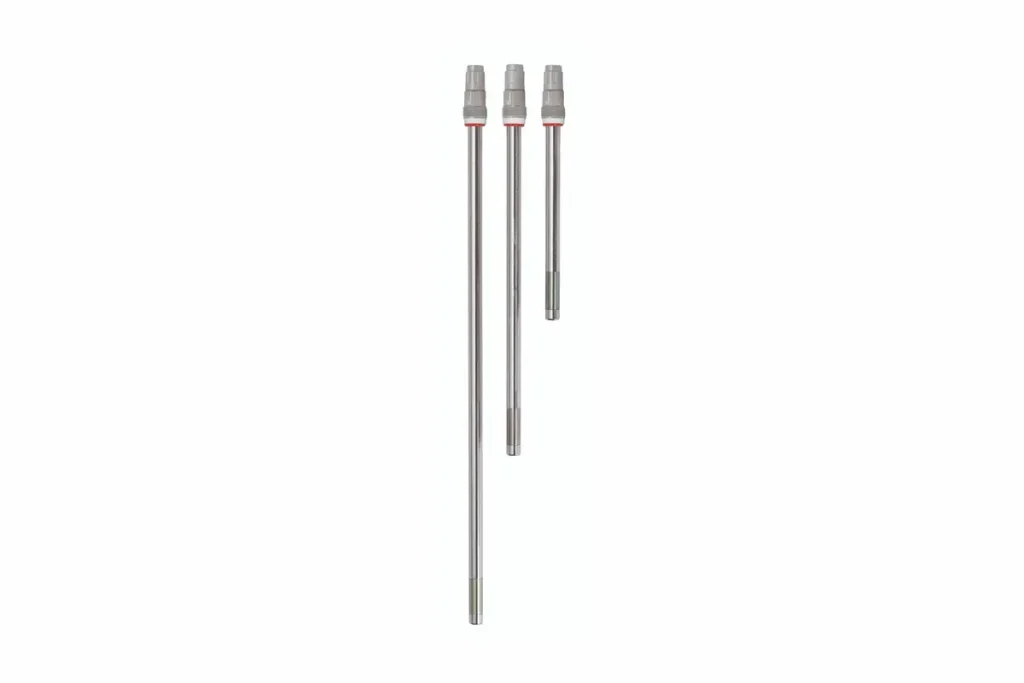
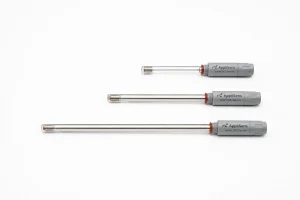
The AppliSens DO₂ is Applikon’s classic polarographic dissolved oxygen sensor , designed for the long-term stable measurement profile that defines reliable DO control across biotechnological processes. Its defining technical feature is a titanium membrane module —specifically designed to minimize measurement drift over extended cultivation campaigns, where aging polarographic probes traditionally lose accuracy. With low drift due to its titanium/PEEK construction, fully electropolished surfaces for optimal SIP/CIP cleanability, and easy calibration via native Applikon controller integration, the AppliSens DO₂ is the proven foundational DO sensor in the AppliSens range.

Inside the AppliSens DO₂ Sensor.

The AppliSens DO₂ is built around a single engineering decision that sets it apart from generic polarographic dissolved oxygen probes: a titanium membrane module specifically designed to minimize measurement drift over the long cultivation campaigns that define real bioprocess work. Polarographic DO measurement is the established Clark electrode principle—an oxygen reduction reaction across a gas-permeable membrane generates a current proportional to the dissolved oxygen—and the limitation of the technology has always been drift. The membrane module is the point at which every polarographic probe lives or dies: the more favorable the design, the faster the drift, the shorter the calibration interval, and the more frequent the membrane rebuild. The AppliSens DO₂ counters this failure mode with a titanium membrane module construction—corrosion-resistant, dimensionally stable over thermal cycles, and specifically designed for the long-term stable, precise measurements required by biotechnological processes. For groups that truly need polarographic DO measurement to deliver the signal stability upon which production-scale process control depends, the titanium module is the design decision that makes all the difference.

Built with Excellence and Experience.

The AppliSens DO₂ is the polarographic dissolved oxygen sensor in the AppliSens series—Applikon’s own sensor family, developed in parallel with the Applikon controller portfolio rather than acquired through partnerships. The practical implications are clear: The DO₂ sensor connects via native USB integration to Livit Flex, ez2-Control, my-Control, and in-Control , with the AppliSens driver built directly into the Applikon controller software. No external transmitter, no separate transmitter cabinet, no second software stack for learning. Sensor health, calibration history, and live values ​​all appear on the same Applikon interface, which drives the rest of the bioprocess.

Ease of Setup with Advanced Process Control.

A microorganism or cell responds to oxygen concentration by adjusting its entire metabolism. This single biological reality is why dissolved oxygen is one of the few process variables that actually drives a bioprocess , rather than merely monitoring it. Cell viability depends on remaining within the appropriate DO window for the organism—drifting out of this window during a fed-batch causes metabolic stress, which manifests as titer loss. Productivity correlates directly with how closely the DO control loop follows the setpoint; the difference between ±2% DO control and ±10% DO control is reflected as percentage points in product yield. Process consistency across multiple runs depends on identical DO profiles—meaning that calibration drift of the DO probe becomes the limiting factor for batch-to-batch reproducibility. The AppliSens DO₂ exists to keep the probe out of this limiting position. Long-term stability through the titanium membrane module, easy calibration through native controller integration, and the cleanable design that withstands repeated SIP/CIP routines combine to create the operational profile that makes cell biology—not the DO sensor—the variable that defines the cultivation result.

The Resea DO sensor lineup — choosing across the AppliSens range and beyond

The Resea Biotec sensor catalogue includes four dissolved oxygen measurement options across two technology families — classical polarographic with AppliSens (Applikon-native) and optical with AppliSens or Hamilton. The right choice depends on three operational questions: whether the bioprocess benefits from optical DO measurement (no electrolyte, no membrane refills, longer calibration intervals), whether native AppliSens integration is the priority (single-vendor calibration workflow, consolidated service contract), and whether the lab already runs the Hamilton Arc ecosystem for pH, biomass and dissolved CO₂ that the new DO sensor should fit alongside.

  1. 1 AppliSens DO₂ — Classical polarographic with titanium membrane module, AppliSens (Applikon) — for AppliSens-native labs running proven polarographic DO measurement across standard cell culture and fermentation workflows, with the durability of the titanium membrane architecture across long campaigns.
  2. 2 AppliSens smart DO₂ — Polarographic measurement with smart electronics, AppliSens (Applikon) — for sensor-based data workflows in the AppliSens stack with on-board diagnostics layered onto the proven polarographic principle.
  3. 3 AppliSens LumiSens — Optical DO₂ via RedFlash luminescence quenching, AppliSens (Applikon) — for native AppliSens labs that want optical DO measurement with annual-cycle calibration economics and non-consumable sensing element across long campaigns.
  4. 4 Hamilton VisiFerm DO₂ — Optical DO via luminescence quenching with Arc Intelligence, Hamilton (third-party provider) — for multi-vendor sensor environments and labs already invested in the Hamilton Arc ecosystem for pH, biomass and dissolved CO₂.

How polarographic DO measurement actually works.

Polarographic dissolved oxygen measurement is based on the classic Clark electrode principle—and although optical DO alternatives are gaining increasing market share, polarographic remains the most widely used DO measurement technology in bioprocess work because its operational behavior is well understood, its calibration procedure is universal, and its drift characteristics are predictable. The mechanism is electrochemical: a gas-permeable membrane allows oxygen to diffuse from the culture medium into a sensor head containing an electrolyte solution. Inside, oxygen molecules are electrochemically reduced at a cathode (typically platinum or gold) under applied voltage, generating a current directly proportional to the oxygen partial pressure at the membrane surface. The current is processed, calibrated against known reference points (typically zero oxygen and air saturation), and converted into a DO percentage or mg/L reading that the operator can act upon. The membrane module is where polarographic probes live or die — and that is precisely where the AppliSens DO₂ concentrates its engineering attention.

AppliSens DO₂ Sensor

Titanium and PEEK construction — why these materials matter.

The low-drift, long-lasting performance of the AppliSens DO₂ is a direct result of two design decisions. Titanium in the membrane module provides corrosion resistance to the chemical environment of culture media (organic acids during fermentation, salts in cell culture buffers, repeated cleaning agents during CIP) and dimensional stability through the thermal cycling of repeated SIP and autoclaving routines. Generic polarographic probes with stainless steel or polymer membrane modules degrade measurably faster under the same conditions. PEEK in the supporting structure provides the chemical inertness required for direct contact with bioprocess media, plus the mechanical strength to withstand repeated handling and installation cycles. Together, titanium and PEEK create the drift profile that makes the AppliSens DO₂ a long-term measurement asset rather than a recurring consumable. The fully electropolished surface on these materials provides optimal cleanability — biofilms, protein deposits and salt deposits all resist accumulation on the polished surface and are removed with shorter, less aggressive cleaning protocols.

AppliSens DO₂ Sensor
WORKFLOW

From port to DO data — the AppliSens DO₂ workflow

The AppliSens DO₂ workflow runs across three phases.

Install. Connect the AppliSens DO₂ to your Applikon controller through the standard K9 analog input — the polarographic nA signal feeds directly into the controller’s dissolved oxygen channel on Livit Flex, ez2-Control, my-Control and in-Control with no driver activation required. Install through your bioreactor’s sensor port and autoclave the assembled vessel with the sensor in place where the campaign requires it.

Calibrate. Standard two-point polarographic calibration through the controller interface — zero-oxygen reference (typically N₂-sparged) and air-saturated reference — establishes the working DO signal. The titanium membrane module architecture delivers a stable calibration baseline that holds across long campaigns, with calibration history logged into the controller’s batch record alongside the rest of the process data.

Operate. Real-time DO data appears on the Applikon controller interface throughout the campaign — DO control loops run against the specified setpoints, calibration history and sensor diagnostics display on the same user interface that manages dosing, temperature, stirring and feeding. Pass the DO data to Lucullus PIMS or OPC UA-connected SCADA for the data management layer.

Why use the AppliSens DO₂?

  • Proven Clark electrode polarographic measurement — the established electrochemical dissolved oxygen principle, with native AppliSens integration into the Applikon controller stack.
  • Titanium membrane module architecture — minimal long-term drift, stable signal across extended cultivation campaigns, and the durability profile that polarographic DO measurement needs to deliver across long mammalian, stem-cell and fermentation runs.
  • Titanium and PEEK construction, fully electropolished — autoclave-, SIP- and CIP-tolerant with optimal cleanability across repeated sterilisation cycles.
  • Native Applikon integration — K9 analog input on Livit Flex, ez2-Control, my-Control and in-Control reads thepolarographic nA signal directly; no external transmitter, no separate sensor management software.
  • AppliSens-native sensor bench — designed to integrate alongside AppliSens pH+ (electrochemical pH) and AppliSens LumiSens (optical DO₂) for a single-vendor calibration workflow and consolidated AppliSens service contract
  • Lab-to-production scale span — process development from sub-100 mL screening through to multi-litre production work, on the same sensor architecture across the scale range.

The polarographic sensor with AppliSens accuracy.

The AppliSens DO₂ is the polarographic DO sensor most labs choose when they want proven Clark electrode measurement without leaving the AppliSens family — same controller, same user interface, same validation chain, same service contract. The titanium membrane module delivers the long-term drift profile that generic polarographic probes can’t match, titanium and PEEK construction with fully electropolished surfaces withstands repeated SIP and CIP cycles, and the AppliSens architecture eliminates the integration overhead that multi-vendor sensor deployments carry. Native K9 analog input on Applikon Livit Flex, ez2-Control, my-Control and in-Control — and designed to sit alongside AppliSens pH+ (electrochemical pH) and AppliSens LumiSens (optical DO₂) on the same controller, the same calibration workflow, the same service contract.

A DO sensor change is rarely just a sensor change — it lands inside an existing controller stack, an existing calibration cadence and an existing service contract, and the integration work is what determines whether the upgrade actually delivers. The AppliSens DO₂ fits inside the AppliSens stack rather than asking the lab to add a parallel one. Resea Biotec is Switzerland’s official Applikon distributor and certified service partner — based in Recherswil, supporting customers across Switzerland with local technical support and on-site service.

Talk to our team and we’ll spec the right AppliSens DO₂ configuration for your bioreactor, plan the integration into your existing Applikon controller fleet, advise on the calibration workflow (zero-oxygen reference and air-saturated reference) for your campaign profile, and stay on hand for application and maintenance support throughout the sensor’s life. Whether you’re standardising a long mammalian cell culture campaign on proven polarographic measurement, building out an AppliSens-native sensor bench with pH+ and LumiSens alongside, or transitioning a fermentation process where membrane durability across long campaigns matters — we’ll help you spec the right combination end to end.

AppliSens DO₂ Sensor
CTA Background

Looking for the Right Bioprocess Solution?

Our specialists support you throughout the entire bioprocess lifecycle — from system selection and application design to implementation, optimization, and long-term operation. We work closely with you to ensure reliable, compliant, and scalable solutions tailored to your requirements.

Talk to Our Experts
Contact Form EN
Request Product

Request Product

Fill out the form and our team will get back to you shortly.

Contact Information