The Applikon In-Control in detail
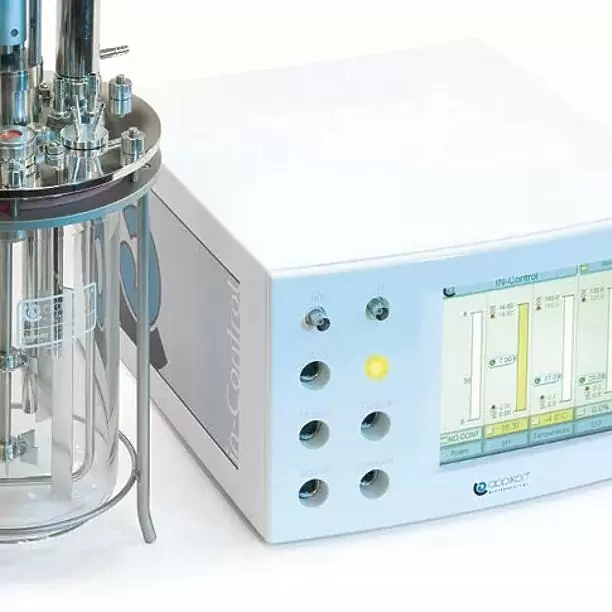
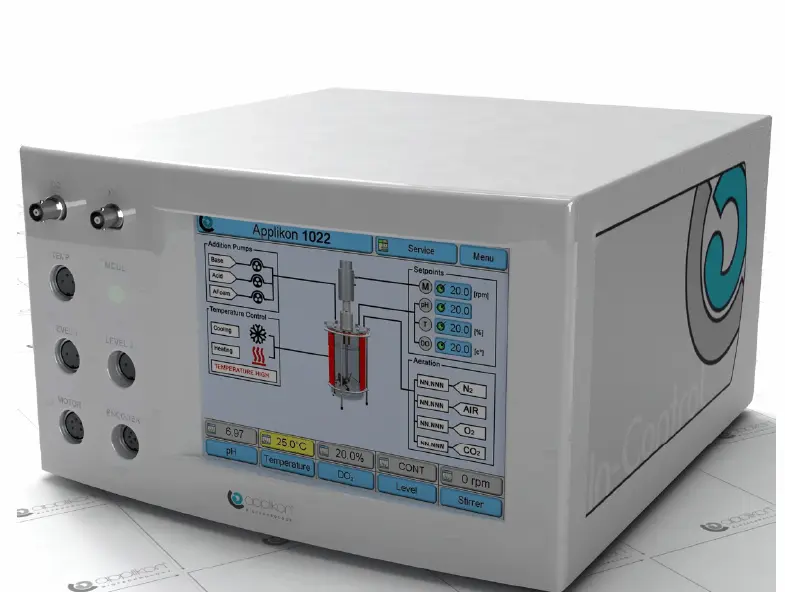
The in-Control is Applikon’s compact bioprocess controller for a single laboratory-scale bioreactor — engineered as the direct successor to the ADI 1010 and ADI 1030 platforms that defined the Applikon laboratory installed base for years. With a footprint of 325 × 326 × 188 mm and a weight of just 12 kg, it slots onto the bench where the ADI used to sit and connect to the same vessel without process redesign. Adaptive PID control with autotuning regulates pH (2–14), dissolved oxygen (0–120 %), temperature (+5 to 70 °C), agitation, foam and level; up to four mass-flow controllers or rotameters drive the gas strategy, and up to four variable-speed pumps handle liquid additions. Operators work through an intuitive touchscreen on the unit itself or through any modern web browser — Windows, macOS or Linux on the desktop, iOS or Android on the move.
Experience and quality in every detail.
The defining promise of the in-Control is continuity. If your laboratory currently runs an ADI 1010 or ADI 1030 Bio Controller, the in-Control connects to the same vessel, the same sensors and the same downstream data systems — with no process downtime and no need to re-qualify the bioreactor itself. What changes is the surface: a modern touchscreen, browser-based remote access, adaptive PID with autotuning that compensates as the culture evolves, and a sensor-and-SCADA catalogue that lets the lab finally reach the data depth that ADI-era hardware couldn’t. Every cultivation mode the original controller supported still runs; everything the original controller couldn’t reach (PAT-grade sensor integration, Lucullus PIMS logging, OPC UA hand-off) is now in scope.
Intuitive operation, deep integration
The in-Control is operated through a clean touchscreen on the unit and, when remote work is needed, through any modern web browser — meaning the same controller can be supervised from a PC, an iPad or a phone. Adaptive PID with autotuning means setpoints stay tracked even as broth viscosity, cell density or oxygen demand shift through the run. The controller integrates a wide sensor catalogue including ABER (capacitance), AppliSens, Hamilton ARC DO, BlueSens, Mettler ISM, Densytee, Incyte and Optek, and speaks Lucullus PIMS, OPC UA and V-Control SCADA out of the box — so the in-Control fits cleanly into any existing bioprocess data environment without bespoke integration work.
Compatible Bioreactors and Controllers
The in-Control covers the laboratory-scale segment of the bioreactor stack — single-vessel lab operation across Applikon’s multi-use and single-use ranges, selected third-party platforms, and drop-in replacement for existing ADI 1010 and ADI 1030 installations.
- 1 Applikon Glass Bioreactors — multi-use, autoclavable — 2 L – 20 L.
- 2 AppliFlex ST — single-use — 500 mL · 3 L · 15 L.
- 3 Millipore Mobius® CellReady — single-use — 3 L.
- 4 Eppendorf BioBlu — single-use — up to 5 L.
- 5 Existing ADI 1010 / ADI 1030 installations — drop-in replacement — as previously installed.
Existing ADI 1010 / ADI 1030 installations transfer to the in-Control as a direct platform-level replacement — no changes to vessel, sensors or piping required, so the upgrade path runs on the same physical hardware your lab is already using.
| Cell Type | Cell Culture and Microbial Other Cell Culture Microbial |
| Technology Platform | Both (multi-Use and Single-Use interchangeable) Multi-Use Single-Use |
| Footprint | 325 mm x 326 mm x 188 mm |
| Recommended bench space (depth x width) | Single set-up: 450 mm x 500 mm |
| Weight | 12 Kg |
| Supported bioreactor working volumes | 2L (0.3 – 1.7 L) 3L (0.6 – 2.4 L 5L (0.9 – 3.4 L) 7L (1.5 – 5.4 L) 15L (1.7 – 12 L) 20L (3.0 – 16L) |
| Agitator | Brushless Motor M10: max. 2000 rpm Brushless Motor M20: max. 2000 rpm |
| Pumps | External – Up to 4 variable speed pumps |
| Supported gas actuators | External gas box options for 4 MFC’s or 4 Rotameters |
| Number of gases | Option for 4 MFC’s or 4 Rotameters |
| Supported gasses | Air CO₂ N₂ O₂ other non-volatile gases |
| Gas selection block | No |
| Controllers Heating system | Heating blanket Cooling valve |
| Offgas heating | Filter heater |
| Pressure Switch | No |
| Temperature control range | + 5 °C up to 70 °C (with cooling water) |
| Temperature sensor | 0 – 150 °C (+/- 0.1 °C) pt-100 |
| pH control | Control range pH 2 – 14 (+/- 0.05) |
| pH sensor | Electrochemical / single-use |
| DO sensor type | polarographic / optical / single-use |
| DO control range | 0 – 120 % (+/- 2%) |
| Redox | Electrochemical AppliSens |
| E-Stop | opt. extern |
| Level/foam | Height adjustable conductivity sensor |
| Additional supported IO actuators | External variable speed pumps |
| Supported sensors | ABER Futura Analog In (4- 20 mA / 0 – 10V) Balances BlueSens BlueInOne, BlueVary, BCP Mettler ISM pH, DO, CO₂ Optek Others Hamilton ARC DO, pH, Redox, CO2, Incyte, Densytee, Glucose |
| Sensors | Balances Cell Density DO Foam Other Offgas pH Temperature |
| Communication protocol L2 | OPC UA / OPC DA Server / fcode |
| Bioreactor (compatible) | Single-Use AppliFlex ST /3L / 15L / Celll Ready / Eppendorf BioBlu Multi-Use Applikon Bio 2 L / 3L / 5L / 7L / 15L / 20L |
| Communication protocol | OPC UA / OPC DA Server / fcode |
| PAT-Enabled | Yes |
| SCADA (Compatible) | Lucullus other via OPC UA V-Control |
| Sensors (compatible) | ABER Futura AppliSens pH / DO Balances BlueSens BlueInOne, BlueVary, BCP Hamilton ARC DO, pH, Redox, CO2, Incyte, Densytee, Glucose Hamilton ARC DO Optek Others LumiSens Mettler ISM pH, DO, CO2 |
| Single setup / Dual Setup | Single setup |
| Automated control loops | Yes |
| Control Settings | PID / Level / External / Adaptive PID |
| Recipes (step chain) | Lucullus Control required Yes |
| IQ/OQ/PQ support | Yes |
| Recommended service interval | 12 months |
| Warranty period | 12 months (can be extended with service) |
| Lead time | Depending on system number and complexity (approx 12 -15 weeks) |
| 21 CFR Part 11 compliant | Software required System can be used in a 21 CFR Part 11 compliant environment |
| CE Certified | yes |
| GAMP 4 | Yes |
| GAMP class | N/A |
| UL | N/A |
| Validation documentation available | Yes |
| Power consumption | P-max = 200 VA |
| Field of application | Process Development Research Small Scale Production |
| Qualification package level | FAT Standard IV/OV depending on needs SAT |
Research & Process Development
The in-Control is designed for research and process development at laboratory scale. Its adaptive PID autotuning continuously adjusts to changing process conditions during cultivation, delivering precise and reliable control of all key bioprocess parameters — pH, DO, temperature, agitation, and gas flow — across both cell culture and microbial applications. Remote access via any web browser on PC, tablet, or smartphone keeps researchers connected to their process at all times.
Screening & Optimization
Compatible with a broad range of lab-scale bioreactor systems — including the AppliFlex ST, Applikon glass bioreactors (2–20 L), CellReady, and Eppendorf BioBlu — the in-Control integrates seamlessly into existing screening setups. Its PAT-enabled architecture and support for an extensive range of sensor technologies, including optical, electrochemical, and single-use sensors, provide the measurement depth required for rigorous process optimization work.
GMP Transition
The in-Control is built for use in 21 CFR Part 11 compliant environments and carries GAMP 4 classification — making it a reliable foundation for GMP-bridging work at lab scale. Full IQ/OQ/PQ support, validation documentation, and compatibility with Lucullus PIMS, OPC UA, and V-Control SCADA systems ensure seamless integration into regulated process data environments from day one.
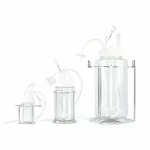
Compatible bioreactor systems.
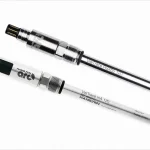
Compatible sensors.
- AppliSens pH-Sensor
- AppliSens DO₂-Sensor
- AppliSens LumiSens Optical DO₂ Sensor
- AppliSens Smart DO₂ Sensor
- AppliSens Smart pH Sensor
- Hamilton EasyFerm Plus Arc
- Hamilton VisiFerm DO₂ Arc Sensor
- Hamilton CO₂NTROL Arc Sensor
- Hamilton Incyte Arc Intelligent capacitance sensor for real-time viable cell density (VCD) measureme…
- Hamilton Dencytee Arc The Hamilton Dencytee ARC is an intelligent optical sensor for total cell densit…
Compatible software.
Mammalian Cells
Mammalian cells have become the linchpin in the production of recombinant glycoproteins such as hormones, enzymes, cytokines, and antibodies, all of which play pivotal roles in human therapy.
Learn MoreStem Cells
Stem cells represent a pioneering achievement in biomedical research and therapy, offering unprecedented opportunities for regenerative medicine, including tissue engineering and the treatment of various diseases.
Learn MoreMicrobials
In the field of industrial microbiology, the cultivation of microorganisms through bioreactor fermentation stands as a cornerstone technique for producing a broad spectrum of microbial products, from antibiotics, biofuels to food and beverages
Learn MorePlant Cells and Algae
At the forefront of sustainable biotechnology, the cultivation of plant cells and algae within bioreactors presents a revolutionary approach to producing valuable biochemicals, pharmaceuticals, and biofuels
Learn MoreInsect Cells
In the rapidly evolving landscape of biotechnology, the Baculovirus Expression Vector System (BEVS) with insect cells stands out as a versatile and powerful tool for protein production.
Learn More
Cellular Agriculture
Cellular agriculture represents a groundbreaking shift in food production, centering around the concept of cellular food solutions. This innovative field harnesses biotechnology to cultivate animal and plant cells for food, directly in a controlled environment, bypassing traditional farming methods.
Learn MoreBiotherapeutics
Discover biologicals, where innovation meets healthcare to revolutionize treatment methodologies and patient care. Biotherapeutics include a broad range of biologically derived products, such as monoclonal antibodies (mABs), viral vectors, and vaccines, each playing a pivotal role in targeted disease treatment and prevention.
Learn MoreCell and Gene Therapy
Cell and gene therapy is revolutionizing modern medicine. For the safe development and manufacturing of these therapies, Resea Biotec bioreactors provide the ideal controlled environment, guaranteeing precision, scalability, and efficiency in the production process.
Learn More
Modernise the controller, keep the science
Most labs that move to the in-Control are not starting from scratch — they’re protecting an existing bioreactor, an established process, and years of SOPs and campaign data already built around a specific vessel geometry. The in-Control is built around that constraint. The vessel stays in place. The sensors and piping stay in place where compatible. The SOPs stay valid. The new controller takes over.
What changes is the regulation underneath. Adaptive PID with autotuning compensates for the conditions older platforms had to be manually retuned around — rising viscosity through a fed-batch, the oxygen-demand spike at inoculation, foam break-through at late-stage cultivation, the slow drift of an ageing pH probe. Modern sensor integration brings PAT-grade measurement that ADI-era hardware was never specified for: in-line biomass via Hamilton Incyte, dissolved CO₂ via CO₂NTROL Arc, optical DO via VisiFerm and LumiSens — all reading into the same browser-based control environment that pH, temperature, agitation and feed control run on.
The continuity is the point. Day-one operation on the new in-Control runs the same vessel, the same probes (where compatible) and the same process the lab was running the day before — the upgrade modernises the bottleneck without resetting the work that surrounds it. Validation packs (IQ/OQ/PQ) are available where the regulatory posture requires them. The science continues; only the bottleneck disappears.

Tight regulation across every laboratory parameter
The in-Control delivers precise, reliable regulation of every key bioprocess variable in a single-vessel lab installation. pH from 2 to 14, dissolved oxygen from 0 to 120 %, temperature from +5 to 70 °C, plus agitation, foam and level — each on a dedicated PID loop with adaptive tuning. Up to four mass-flow controllers or rotameters drive the gas strategy across O₂, N₂, CO₂ and air, sized to the loop. Up to four variable-speed pumps handle liquid additions for acid, base, antifoam and feed. Analogue inputs read the classical sensor stack — pH, DO, redox, temperature, pressure — while digital channels accept Hamilton ARC sensors directly for in-line CO₂, optical DO and viable cell density.
The platform runs the campaign from a recipe rather than a manual SOP. Time-and-event-triggered setpoints, conditional logic and alarm chains execute against the locked process file; every measurement — in-line, off-line and at-line — lands in the same structured data record at sub-second resolution. Native integration with Lucullus PIMS carries that data into downstream batch reporting, DoE analysis and audit-trail-ready logging — so the in-Control’s measurements remain queryable, comparable and reviewable long after the campaign closes.

What is the in-Control workflow?
The in-Control workflow runs across three phases.
Install. Connect the in-Control to your bioreactor — either an existing vessel you’re already running, typically replacing an ADI 1010 or ADI 1030 install, or a new lab-scale installation. Attach the sensor stack — pH, DO, temperature, and any digital Hamilton ARC channels — through the controller’s analogue and digital inputs. Run the IQ/OQ qualification sequence where the regulatory posture requires it. An ADI-replacement upgrade typically takes less than a working day; a fresh installation runs slightly longer to accommodate vessel commissioning and sensor calibration.
Configure. Set up the campaign through the touchscreen or any web browser — every major OS supported, no dedicated workstation required. Build the recipe: PID loops, mass-flow and pump assignments, alarm chains, sample plans and data-logging cadence. Auto-tune each loop against the empty vessel or against your historical setpoint baseline. Map the controller into the wider lab software landscape — Lucullus PIMS for structured data and batch reporting, OPC UA for plant-level SCADA integration, V-Control for DeltaV environments.
Operate. Launch the campaign and run it from the recipe. Monitor and adjust live from the lab bench, a desk in the office or off-site — every sensor reading landing in the same data record at sub-second resolution. The platform is GAMP 4 classified with an optional 21 CFR Part 11-compliant environment and full IQ/OQ/PQ documentation, so the campaign data carries the regulatory posture downstream validation work requires.
Why use the in-Control?
- Drop-in replacement for ADI 1010 and ADI 1030 installs — keep the vessel, sensors and piping; modernise only the controller.
- Compact single-vessel lab platform — 325 × 326 × 188 mm, 12 kg — fits any lab bench without dedicated utility space.
- Wide sensor catalogue — ABER, AppliSens, Hamilton ARC (EasyFerm Plus, VisiFerm, Incyte, Dencytee, CO₂NTROL), BlueSens, Mettler ISM and Optek across analogue and digital inputs.
- Browser-based operation across every OS — Windows, macOS, Linux, iOS and Android; the same campaign data accessible from bench, desk or off-site.
- Software-ready for the Applikon ecosystem and beyond — native Lucullus PIMS integration, OPC UA for plant-level SCADA, V-Control for DeltaV environments.
- Regulatory posture out of the box — GAMP 4 classified, optional 21 CFR Part 11-compliant environment, IQ/OQ/PQ documentation.
The right controller for one vessel, the right step for your lab.
The Applikon in-Control is a single-vessel, lab-scale bioprocess controller — compact, browser-operated, GAMP 4 classified, with adaptive PID across pH, DO, temperature, agitation, foam and level. Compatible with Applikon Glass Bioreactors (2–20 L), AppliFlex ST, Millipore Mobius® CellReady and Eppendorf BioBlu, and a drop-in replacement for existing ADI 1010 and ADI 1030 installations — so the upgrade modernises only the controller while the vessel, sensors and process continuity stay in place.
The right controller for one vessel is rarely a question of features alone — it’s a question of fit. A focused lab-scale single-vessel platform that brings modern regulation, sensor integration and validation documentation without the cost or complexity of multi-vessel hardware. Resea Biotec is Switzerland’s official Applikon distributor and certified service partner — based in Recherswil, supporting customers across Switzerland and with technical support and on-site service.
Talk to our team and we’ll spec the right in-Control configuration for your lab, plan the upgrade from your existing ADI 1010 or ADI 1030 controller where applicable, coordinate IQ/OQ/PQ documentation, and stay on hand for application and maintenance support throughout the system’s life. Whether you’re modernising a long-running research platform, kitting out a new lab bench, or running a fresh single-vessel programme with PAT-grade sensor integration from day one — we’ll help you get there.

in-Control datasheet & technical resources.
Product specifications, sensor compatibility, actuator options and qualification details for the Applikon in-Control single-vessel laboratory bioprocess controller.
Applikon in-Control — Bioprocess controller datasheet.
Complete product brochure covering the in-Control single-vessel laboratory bioprocess controller — applications, benefits, full sensor and actuator specifications, control hardware platform, 21 CFR Part 11 and GAMP compliance details, and the ADI 1010 / ADI 1030 replacement story.