Inside the Hamilton Incyte Arc Sensor
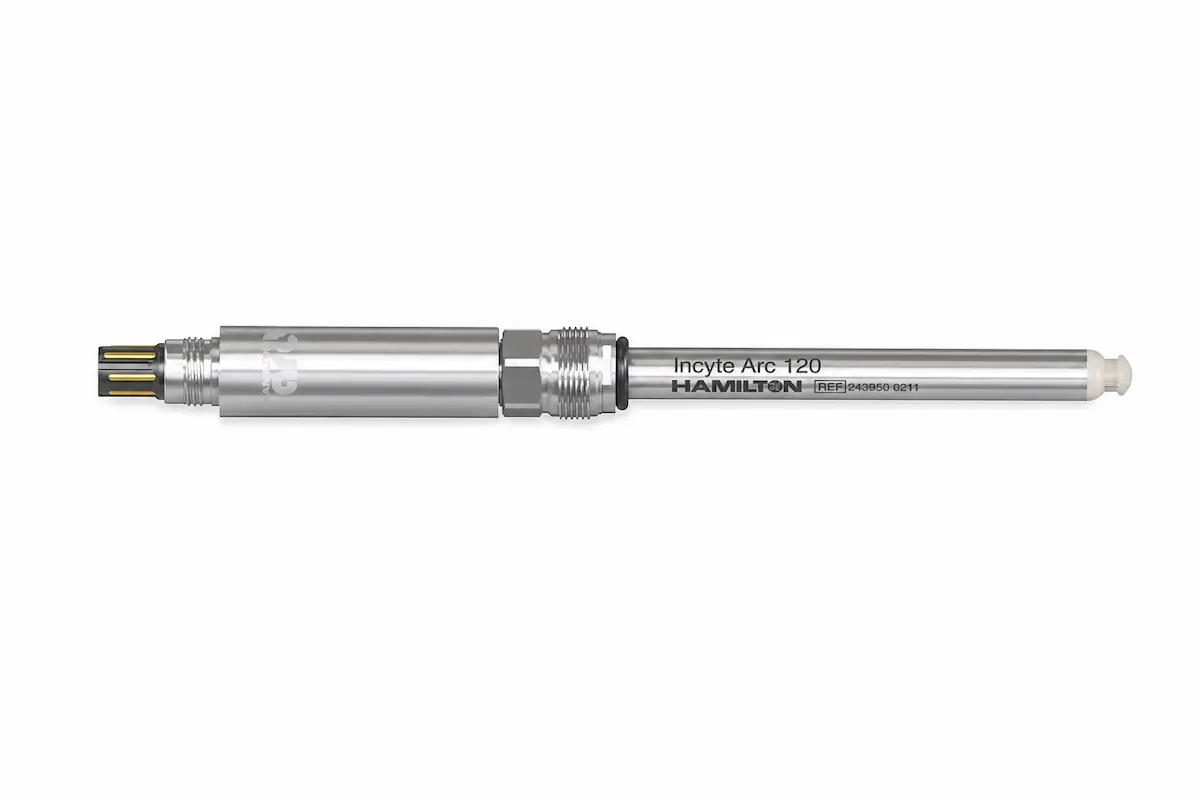
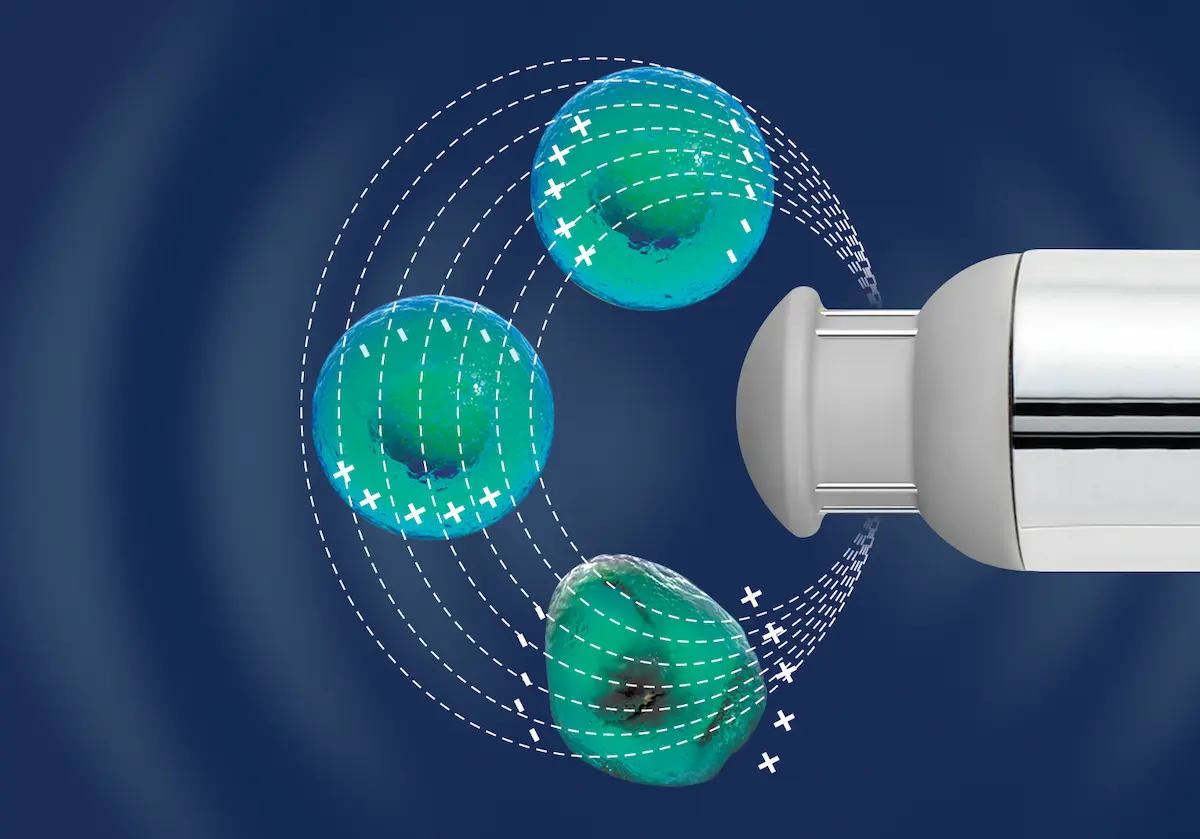
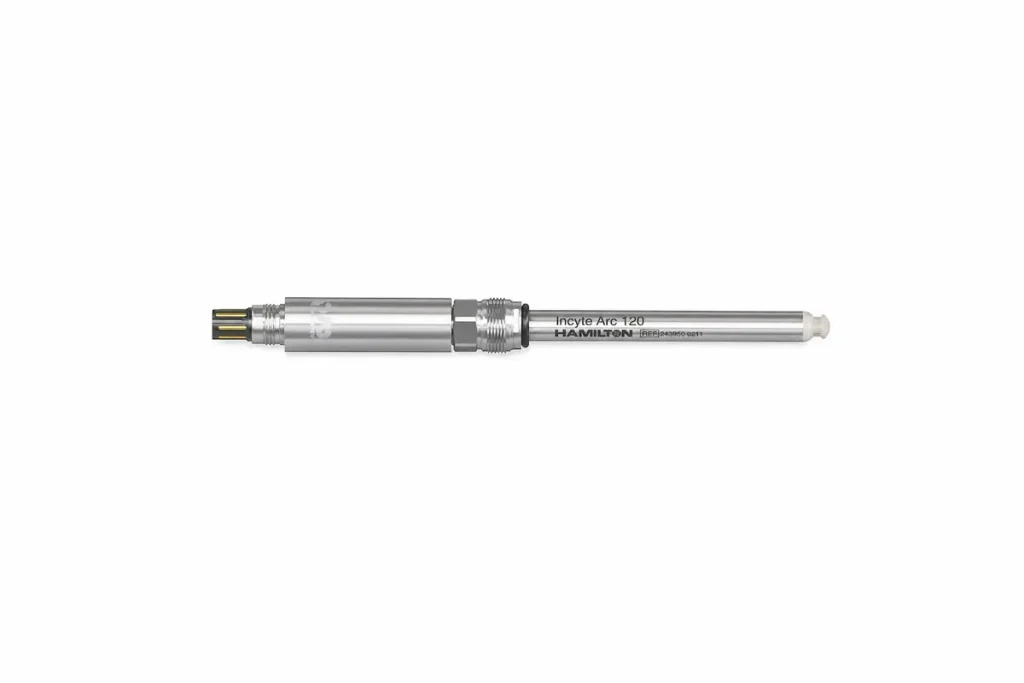
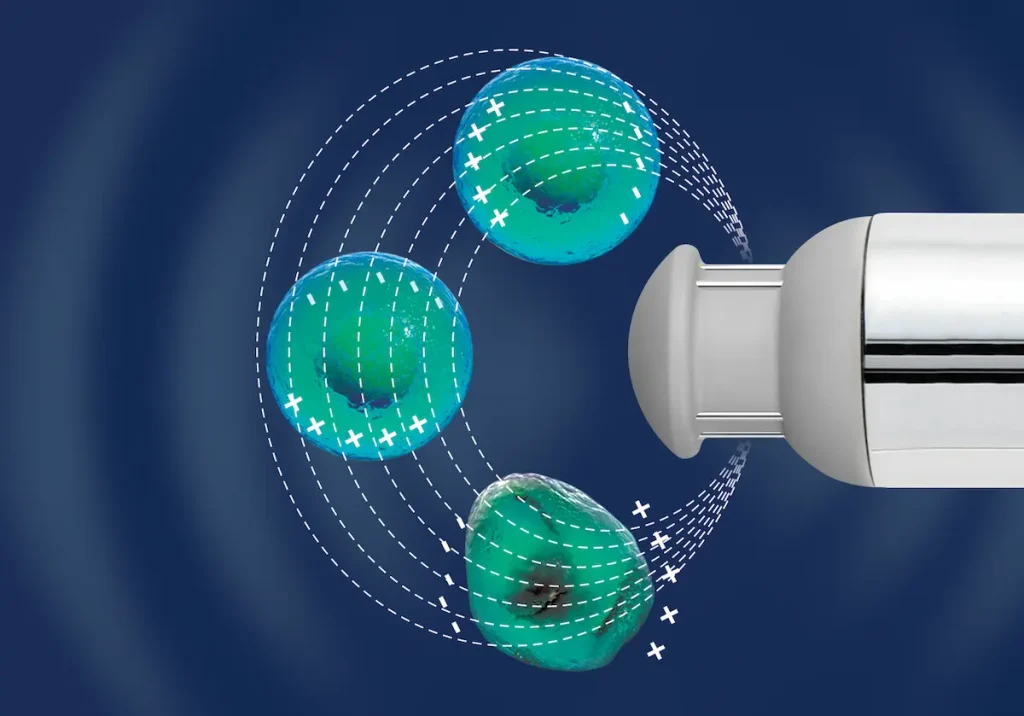
The Incyte Arc is a real-time live cell density sensor built on measuring electrical permittivity . Where optical turbidity sensors count every particle in the suspension—live cells, dead cells, aggregates, debris, and media particles all collapse into a single number—the Incyte Arc treats the bioreactor like a forest of microscopic capacitors: only cells with intact membranes polarize in the applied electric field, only intact membranes contribute to the measured permittivity, only living biomass appears in the reading. What you see on the controller is the metabolically active fraction of the culture—in real time, without sampling, without offline analysis. The measurement covers 0–700 pF/cm (≈ 5×10⁵ to 8×10⁹ cells/mL) with an accuracy of ±1 pF or ±1 % — a range wide enough to track a culture from inoculation to high-density harvest with a single sensor.
Built with Excellence and Experience
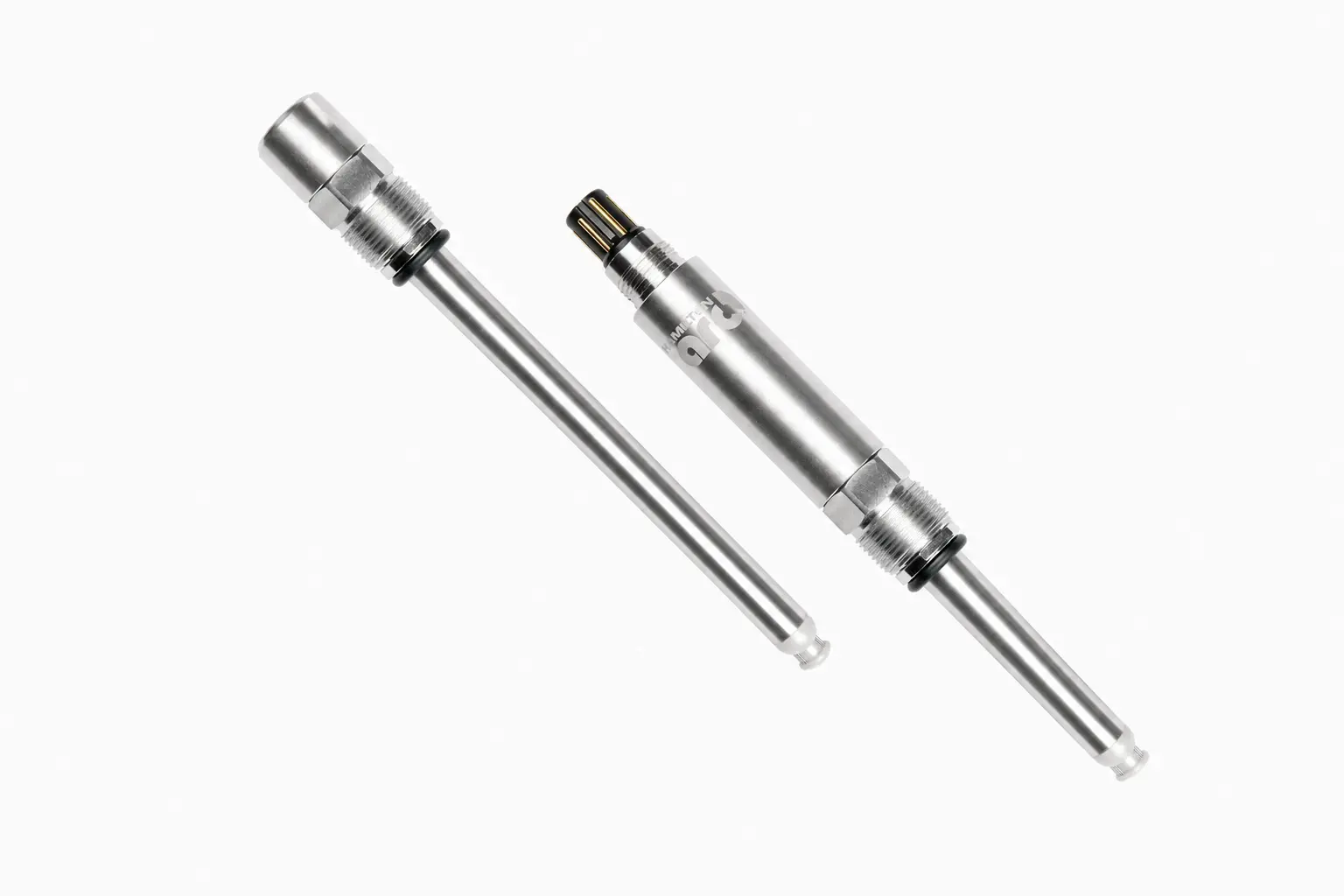
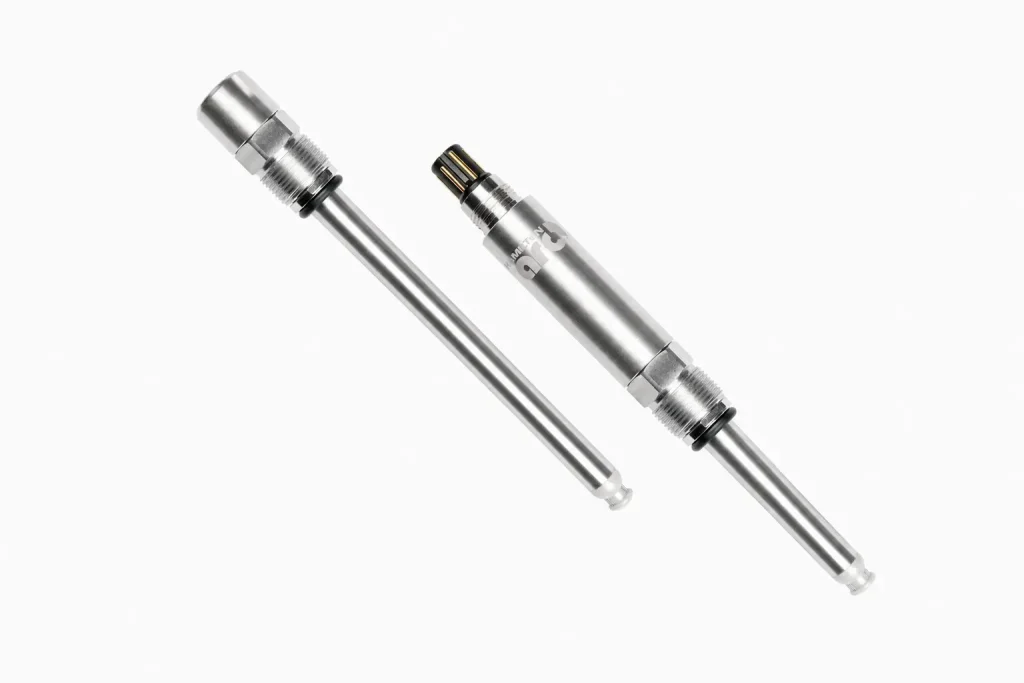
The Incyte Arc belongs to Hamilton’s Arc sensor family —the platform whose defining engineering decision is to integrate the transmitter into the sensor head. Microprocessor, calibration data, and signal conditioning are all housed within the Incyte Arc itself; the sensor communicates directly with the Applikon controller via Modbus ARC —no external transmitter, no signal converter box, no separate control cabinet. In practice: activate the Hamilton Arc driver in your Applikon controller, and the Incyte Arc is recognized upon connection and configurable via the familiar Applikon interface. Livit Flex, ez2-Control, my-Control, and in-Control natively support full Arc integration.
Ease of Setup with Advanced Process Control
The Incyte Arc is designed for Process Analytical Technology (PAT) workflows, which increasingly define both research and regulated production. Continuous in-line VCD measurement replaces offline counting, which used to be the bottleneck of every cell culture campaign—and because the Arc architecture eliminates the external transmitter, system complexity, and thus validation effort, is reduced. Autoclavable up to 140°C and suitable for repeated SIP cycles, the sensor moves between research, process development, and GMP transition without changing hardware. Compatible with Applikon glass autoclave bioreactors, AppliFlex ST single-use systems, BioBench stainless steel, and BioPilot pilot vessels—the Incyte Arc carries the same VCD signal across every scale a development pathway goes through.
One sensor across the Applikon family
The Incyte Arc is supplied in four insertion lengths covering every Applikon vessel format — and shares the same 12 mm diameter, PG 13.5 thread, VP8 connector and 140 °C autoclave rating across the entire range.
At lab scale.
-
1
Applikon Autoclavable Glass Bioreactor (2 – 20 L) for process development.
-
2
AppliFlex ST (2 L – 15 L) single-use stirred-tank.
At bench and pilot scale.
-
1
BioBench (20 – 30 L) for cGMP-grade development.
-
2
BioPilot (30 – 270 L) for clinical and small-commercial production.
The incyte sensor is with the Arc protocol compatible with every Applikon controller in our range — Livit Flex, ez2-Control, my-Control and in-Control. Process knowledge built at the bench transfers cleanly upward through the Applikon family without changing the sensor technology.