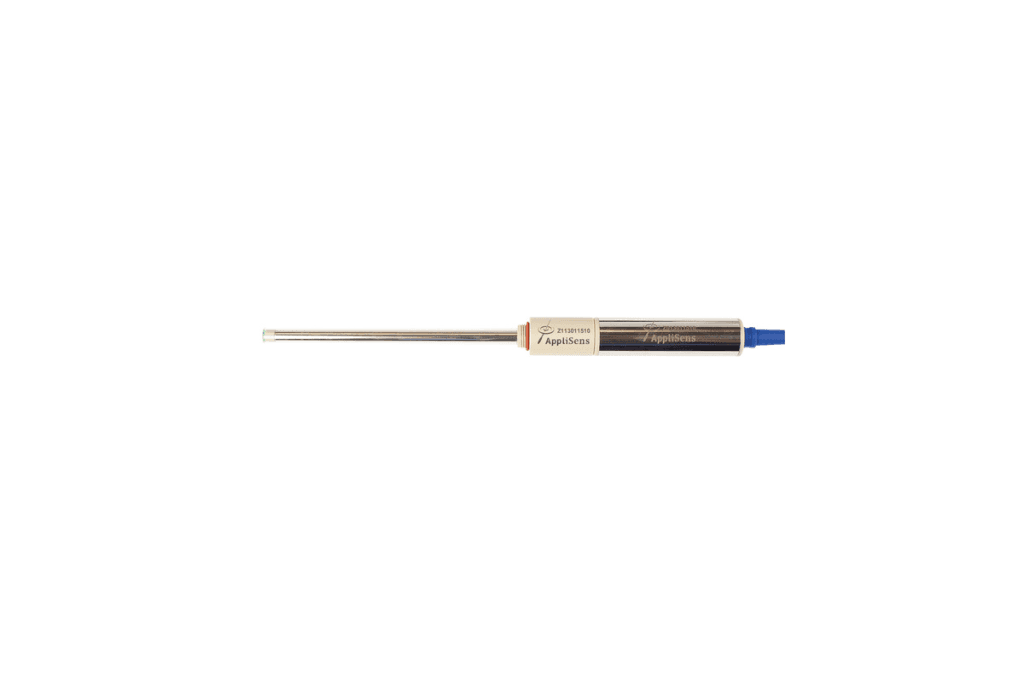
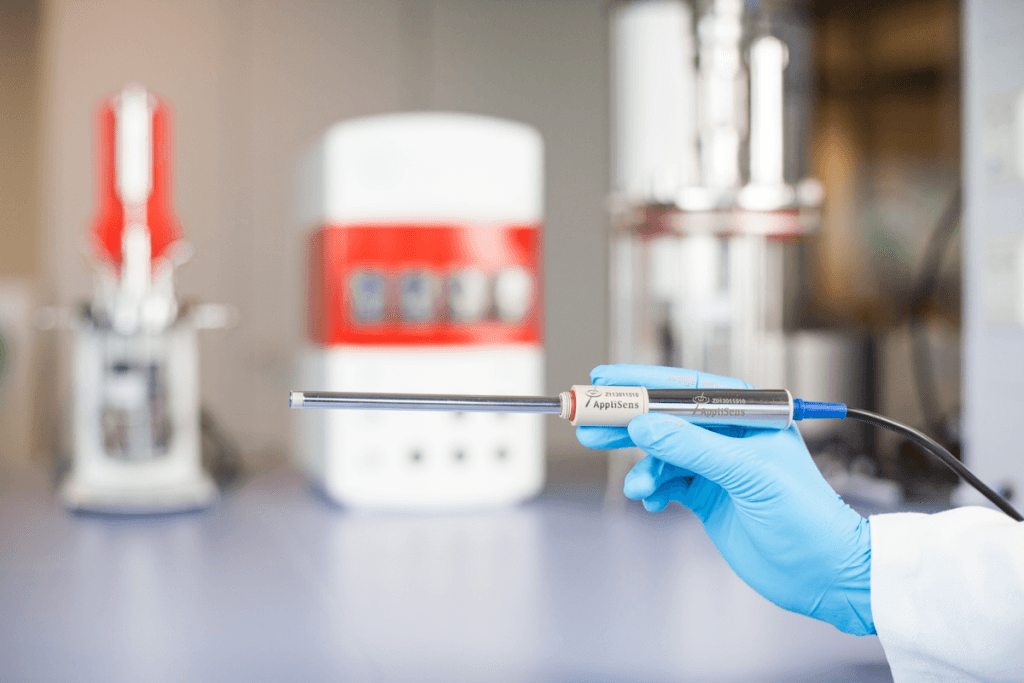
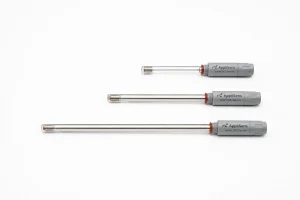
AppliSens LumiSens Optical DO Sensor – RedFlash Technology for Cell Culture and Microbial Cultivation.

The AppliSens LumiSens is Applikon’s proprietary optical dissolved oxygen sensor , built on RedFlash technology for precise DO₂ measurement across cell culture and microbial bioprocesses—and designed around the very operational profile that makes optical DO measurement significantly superior to polarographic measurement. No polarization is required before use; it’s ready to measure immediately after autoclaving, there’s no electrolyte to replace, no membrane to rebuild—and calibration is reduced from once per run to once per year . It’s especially precise in the low oxygen concentration range where conventional probes become inaccurate. Native USB integration with the Applikon controller series.
 Inside the AppliSens LumiSens optical DO₂ sensor.

The LumiSens is an optical dissolved oxygen sensor built on RedFlash technology —Applikon’s optical DO platform designed for the operational realities of bioprocess cultivations, not laboratory bench conditions. The measurement principle is luminescence-based: a light source excites an oxygen-sensitive indicator, whose emission is quenched by the oxygen present in the medium, and the resulting optical ratio is the DO reading. Where the LumiSens truly lives up to its name is its accuracy at low oxygen levels. : in the concentration range where classic polarographic probes lose precision (the range that is often actually relevant when switching between aerobic and microaerobic cultivation, in hypoxic stem cell protocols, and in late fed-batch phases where oxygen demand exceeds supply), RedFlash continues to read cleanly. The smart sensor design separates the electronics from the glass sensor part — so the unit survives repeated autoclave and SIP cycles without showing the wear pattern that defines the life cycle of polarographic sensors.

Built with Excellence and Experience.

The LumiSens is the optical DO sensor in the AppliSens series—Applikon’s own sensor family, developed in parallel with the Applikon controller portfolio rather than acquired through partnerships. The practical consequences are clear: The LumiSens connects via native USB integration to Livit Flex, ez2-Control, my-Control, and in-Control , with the AppliSens driver built directly into the Applikon controller software. No external transmitter, no separate transmitter cabinet, no second software stack for learning. Sensor health, calibration history, and live values ​​all appear on the same Applikon interface, which drives the rest of the bioprocess.

Ease of Setup with Advanced Process Control.

The LumiSens delivers the operational advantages that justify optical DO measurement over polarographic alternatives—most of them revolving around what you don’t have to do. No polarization is required before use ; the sensor reads as soon as it’s powered on. It’s ready to use immediately after autoclaving , with no equilibration delay before starting a culture. No electrolyte to replace , no diaphragm to rebuild—the maintenance routine that polarographic probes accumulate over their lifespan simply doesn’t apply. Calibration drops to once a year (instead of once per run), reducing operator workload and cumulative calibration drift. The construction materials reinforce its durability: titanium and PEEK keep drift low over long campaigns, and the fully electropolished surface provides optimal cleanability through SIP and CIP cycles. Repeated sterilization is a design feature, not a failure mode.

The Resea DO sensor lineup — choosing between optical and polarographic.

  1. 1 AppliSens LumiSens — Optical DO₂ via RedFlash luminescence quenching, AppliSens (Applikon) — for native AppliSens labs that want optical DO measurement with non-consumable sensing element and annual-cycle calibration economics.
  2. 2 AppliSens Smart DO₂ — Polarographic measurement with smart electronics, AppliSens (Applikon) — for standard cell culture and fermentation workflows running tighter polarographic precision with native Applikon controller integration.
  3. 3 AppliSens DO — Classic polarographic measurement, AppliSens (Applikon) — for cost-conscious workflows running routine polarographic DO measurement in the established AppliSens stack.
  4. 4 Hamilton VisiFerm DO₂ — Optical DO via luminescence quenching with Arc Intelligence, Hamilton (third-party provider) — for multi-vendor sensor environments and labs already invested in the Hamilton Arc ecosystem for pH, biomass and dissolved CO₂.

Why optical DO measurement is becoming the standard on the workbench.

The arguments for switching from polarographic to optical dissolved oxygen measurement add up over the entire cultivation lifecycle. At startup : no polarization delay, no membrane conditioning, no electrolyte preparation—the LumiSens reads as soon as power reaches the sensor. During the run : stable signal, no membrane fouling drift, no oxygen consumption at the sensor surface altering the local microenvironment, and accurate readings at low DO concentrations where polarographic methods become inaccurate. During maintenance : no electrolyte refilling, no membrane changes, and no rebuilding of the electrochemical stack between runs. Over the year : calibration only once annually instead of once per run. Every item on the polarographic operating cost list that historically defined the DO probe workflow is simplified, eliminated, or shifted to the operator’s advantage. The smart sensor design separates the electronics from the glass sensor part — so repeated sterilizations do not drive the wear pattern that defines the life cycle of polarographic sensors.

AppliSens LumiSens optical DO₂ sensor

 Designed for long-term cultivation chemistry

The LumiSens design is built around two principles: low drift over time and clean recovery from sterilization. Titanium and PEEK are the primary structural materials—both chosen for their corrosion resistance and dimensional stability through repeated thermal cycling. The fully electropolished surface provides optimal cleanability for SIP, CIP, and autoclave routines. The smart sensor architecture separates the optical electronics from the glass sensing element, so the failure pattern that defines the life cycle of polarographic probes (membrane wear, electrolyte depletion, electrode drift) simply doesn’t apply. For long-term culture chemistry—extended fed-batch campaigns, perfusion processes lasting weeks, or production facilities with multiple campaigns between scheduled maintenance—the LumiSens is designed to outlast the culture, not the other way around.

AppliSens LumiSens optical DO₂ sensor
WORKFLOWS

From port to DO₂ data — the LumiSens workflow.

The LumiSens workflow runs across three phases.

Install. Connect the LumiSens to your Applikon controller via USB — the AppliSens driver is integrated into Livit Flex, ez2-Control, my-Control and in-Control, so the sensor is recognised on connection with no separate driver installation, no firmware mapping. Install through the standard sensor port on your bioreactor and autoclave the assembled vessel with the sensor in place.

Run. Start cultivation immediately after autoclaving — no polarisation step, no equilibration delay. The optical RedFlash measurement principle reads DO₂ from the moment the controller starts logging, so the first hours of the campaign — typically the highest-value characterisation window — are captured at full resolution. Real-time DO₂ data appears on the controller interface throughout the run, and flows natively into Lucullus PIMS or OPC UA-connected SCADA for the data management layer.

Maintain. Calibration is required once a year — not per run. No electrolyte to refill, no membrane to rebuild, and the smart-sensor architecture separates the electronics from the glass sensing element so the wear point is the consumable element only. Across a campaign year, the maintenance burden is structurally lower than the polarographic alternative.

Why use the LumiSens?

  • RedFlash optical measurement — particularly precise in the low-oxygen concentration range where conventional polarographic probes become inaccurate, with no polarisation delay and continuous reading from autoclave to harvest.
  • Annual calibration cycle — not per run, with no electrolyte refills and no membrane rebuilds; the optical measurement principle removes the consumable-replacement burden polarographic alternatives carry across long campaigns.
  •  Robust mechanical construction — titanium and PEEK body with fully electropolished surface for low drift, dimensional stability and optimal cleanability across SIP, CIP and autoclave cycles.
  •  Smart-sensor architecture — electronics separated from the glass sensing element for long lifespan; no external transmitter box and no separate sensor management software stack.
  • Native Applikon integration — USB connection with the AppliSens driver built into Livit Flex, ez2-Control, my-Control and in-Control; auto-recognition on connection across the full Applikon controller range.
  • Lab-to-production scale span — process development from sub-100 mL screening through to multi-litre production work, on the same sensor architecture across the scale range.

The optical DO sensor that fits into the AppliSens stack.

The AppliSens LumiSens is the optical DO₂ sensor most labs choose when they need optical DO precision without leaving the AppliSens family — same controller, same user interface, same validation chain, same maintenance contract. RedFlash technology delivers the low-DO accuracy that polarographic probes lose with use, and the AppliSens architecture eliminates the integration overhead that multi-vendor sensor deployments carry. Annual calibration cycle, no electrolyte refills, no membrane rebuilds — and native USB integration with Applikon Livit Flex, ez2-Control, my-Control and in-Control, so the sensor is recognised on connection with no separate driver setup.

A DO sensor change is rarely just a sensor change — it lands inside an existing controller stack, an existing calibration cadence and an existing service contract, and the integration work is what determines whether the upgrade actually delivers. The LumiSens fits inside the AppliSens stack rather than asking the lab to add a parallel one. Resea Biotec is Switzerland’s official Applikon distributor and certified service partner — based in Recherswil, supporting customers across Switzerland with local technical support and on-site service.

Talk to our team and we’ll spec the right LumiSens configuration for your bioreactor, schedule AppliSens driver activation on your existing controller fleet, advise on the autoclave and maintenance cadence for your campaign profile, and stay on hand for application and maintenance support throughout the sensor’s life. Whether you’re moving a long mammalian campaign off polarographic to escape the membrane-and-electrolyte maintenance cycle, building out an anaerobic or microaerobic process where low-DO precision matters, or extending an existing AppliSens-native lab with the optical DO complement — we’ll help you spec the right combination end to end.

Contact us
Resources

LumiSens datasheet & technical resources

Product specifications, RedFlash measurement principle, autoclave and calibration workflow, and Applikon controller integration reference for the AppliSens LumiSens optical DO₂ sensor.

AppliSens LumiSens — Optical DO₂ sensor datasheet.

Complete technical specifications for the AppliSens LumiSens optical DO₂ sensor — RedFlash measurement principle, insertion length variants (115 / 135 / 185 mm), M12 thread with PG 13.5 adapter, USB connection to the Applikon controller family, titanium and PEEK construction, autoclave rating, annual calibration workflow, and full integration reference for Livit Flex, ez2-Control, my-Control and in-Control.

PDF • 7.5 MB
Download
CTA Background

Looking for the Right Bioprocess Solution?

Our specialists support you throughout the entire bioprocess lifecycle — from system selection and application design to implementation, optimization, and long-term operation. We work closely with you to ensure reliable, compliant, and scalable solutions tailored to your requirements.

Talk to Our Experts
Contact Form EN