Key Facts about Insect Cell Culture

Insect cell culture using the Baculovirus Expression Vector System (BEVS) is one of the most powerful and scalable platforms in modern biotechnology for the production of recombinant proteinsviral vectors, vaccines, and virus-like particles (VLPs). Insect cells derived from Spodoptera frugiperda (Sf9, Sf21) or Trichoplusia ni (High Five / Hi5) sit between the simplicity of microbial systems and the biological complexity of mammalian cells — making them a cost-effective and highly productive choice for a broad range of biopharmaceutical applications.

A key advantage of insect cell culture is its operational simplicity: cells grow in suspension in serum-free media without requiring CO₂ supplementation or active pH titration. Cultivation at 26–28°C eliminates the need for CO₂ incubators and reduces infrastructure costs. While insect cells are more robust than mammalian cells, they remain sensitive to excessive shear stress; gentle agitation and appropriate sparging strategies are essential to maintain cell viability and maximize productivity in the bioreactor.

Insect cells perform a wide range of eukaryotic post-translational modifications (PTMs) — including glycosylation, phosphorylation, and disulfide bond formation — enabling the production of correctly folded, biologically active proteins. Their N-glycosylation pattern (paucimannose-type) differs from mammalian cells, which should be considered for therapeutic glycoproteins. For high-yield recombinant protein production, VLPs, and multi-subunit complexes, however, BEVS with insect cells is often the preferred platform, combining high protein yields with rapid development timelines and cost-effectiveness compared to mammalian cell culture systems.

The BEVS workflow consists of two distinct phases: a growth phase and a post-infection production phase. Cells are expanded to a defined cell density at time of infection (CDTI), then infected with a recombinant baculovirus at a controlled multiplicity of infection (MOI). The baculovirus redirects the cellular machinery to drive high-level expression of the target gene. Cells are harvested 48–96 hours post-infection (hpi) at peak titer. Precise control of CDTI and MOI in the Applikon autoclavable bioreactor or any other Applikon format is critical for consistent product quality and yield.

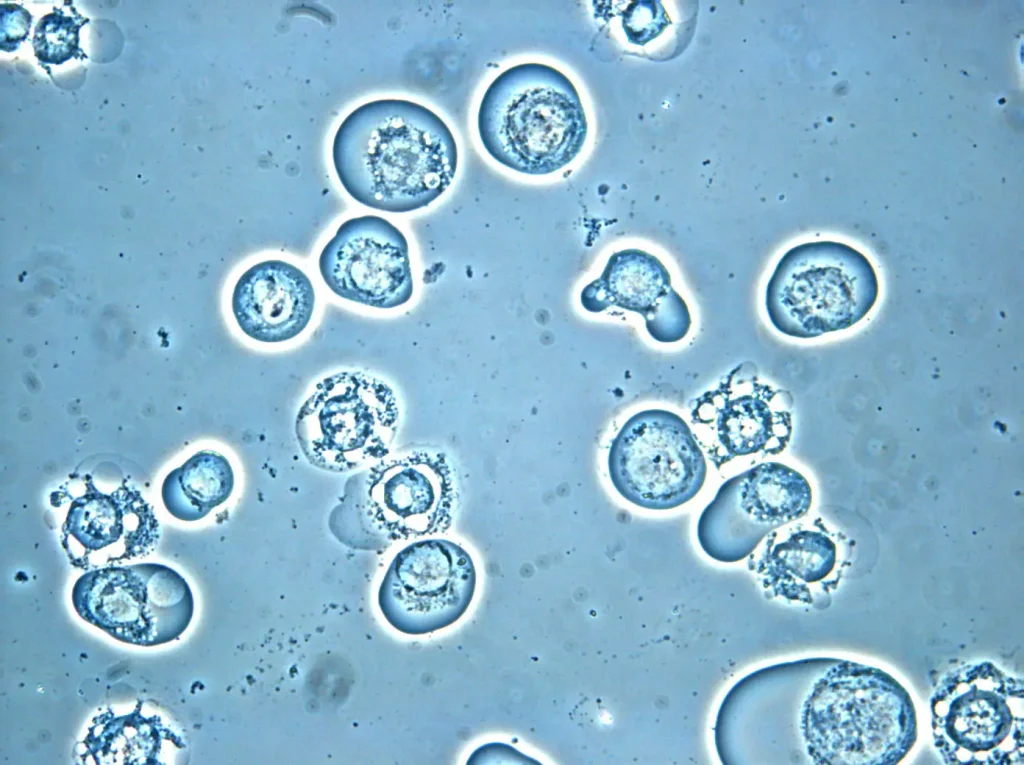
Insect cells

Key Parameters for Mammalian Cell Culture

Successful insect cell cultivation with BEVS requires precise control of a defined set of process parameters. Whether using the Applikon MiniBio Bioreactor for small-scale process development or a production-scale stainless steel system, controlling these parameters is essential for maximizing CDTI, product titer, and process reproducibility across all scales.

Learn More
  • Temperature

    (26–28°C)

    Insect cells are cultivated at lower temperatures than mammalian cells, typically 27°C. No temperature shift is generally required, though slight post-infection reductions have been explored to extend culture viability and improve product quality.

  • pH

    (6.0–6.4, passive control)

    Unlike mammalian cell culture, insect cell culture does not require active pH regulation via CO₂ sparging. The medium’s natural buffering capacity is typically sufficient. Continuous pH monitoring is nonetheless recommended as a process quality indicator.

  • Dissolved oxygen

    (DO, 30–60%)

    DO is maintained via air sparging and/or surface aeration. Insect cells are sensitive to over-sparging; micro-bubble spargers and gentle agitation minimize foam-related shear damage. Post-infection, oxygen demand increases significantly and requires adaptive DO control — a feature natively supported by the Applikon myControl and Livit Flex bioprocess controllers.

  • Agitation and shear stress protection

    Insect cells tolerate moderate agitation but are damaged by excessive tip speeds or large bubbles. Marine or pitched-blade impellers at controlled tip speeds are preferred. Pluronic F-68 supplementation provides additional shear protection. The Applikon autoclavable bioreactor is configurable with cell culture-optimized impellers and micro-spargers to minimize shear stress throughout the cultivation.

  • Cell density at time of infection

    (CDTI)

    CDTI is a critical process parameter in BEVS. Optimal CDTI typically ranges from 1–3 × 10⁶ cells/mL; deviations lead to incomplete infection, reduced specific productivity, and poor batch-to-batch consistency. Online capacitance sensors on Applikon bioreactors enable real-time CDTI tracking.

  • Multiplicity of infection

    (MOI)

    MOI defines the ratio of infectious baculovirus particles to cells. Too low an MOI results in asynchronous infection and reduced titer; too high promotes defective particle accumulation. Typical MOI ranges from 1 to 10, depending on baculovirus stock quality and target protein.

  • Time of harvest

    (72–96 hpi)

    Cell viability declines sharply post-infection due to viral lysis. Harvest timing is optimized by balancing maximum product titer against acceptable cell integrity, monitored via online capacitance or offline cell counting. The Applikon BioSep acoustic separator supports continuous or semi-continuous harvest strategies in perfusion mode.

Standard Process Workflow

To optimize insect cell culture in a bioreactor, it is essential to follow a well-structured process workflow. Insect cell BEVS processes consist of two clearly defined phases: a growth phase culminating in baculovirus infection, and a production phase ending at harvest. The process can be run in batch, fed-batch, or perfusion mode — all supported by Applikon bioreactor systems.

  1. Seed train and expansion

    Sf9, Sf21, or Hi5 cells are expanded from cryopreserved working cell banks (WCBs) in shake flasks or spinner flasks. Stepwise transfer into the bioreactor, while maintaining log-phase growth and a defined passage number, ensures reproducible infection kinetics and consistent process performance.

  2. Inoculation and growth phase

    The Applikon autoclavable bioreactor is inoculated at a seeding density of typically 0.3–0.5 × 10⁶ cells/mL. Cells are cultured under controlled temperature and DO with pH monitoring until the target CDTI (1–3 × 10⁶ cells/mL) is reached. This phase is a key determinant of downstream BEVS performance.

  3. Baculovirus infection

    A pre-titered recombinant baculovirus stock is added at the defined MOI. Viral titer (pfu/mL) is typically determined offline by plaque assay or end-point dilution. Online biomass estimation via capacitance sensors on the Applikon bioreactor improves MOI precision and reduces variability at scale.

  4. Production phase monitoring

    Cell viability, density, and recombinant protein production are tracked throughout the post-infection phase. Dissolved oxygen demand increases as the infection progresses, requiring active DO control. Metabolite monitoring (glucose, glutamine, lactate) supports feeding decisions in fed-batch mode and helps maintain optimal culture conditions for maximum protein yield and quality.

  5. Harvest

    Cells and/or supernatant are harvested at peak product titer, typically 72–96 hpi. For intracellular products such as VLPs or viral vectors, cell lysis and clarification steps follow. For secreted proteins, the clarified supernatant is processed directly. The Applikon BioSep acoustic separator enables continuous or perfusion-based harvest, increasing volumetric productivity and simplifying downstream processing.

Applikon Bioreactor Types for Insect Cell Applications

Applikon offers a complete range of bioreactor systems to optimize insect cell culture at every stage — from early-phase BEVS process development to full-scale recombinant protein and viral vector production. All formats are designed for scalability, GMP compatibility, and seamless process transfer, supported by unified bioprocess control.

TypeScaleKey Use CasesInsect Cell-Specific Features
Applikon MiniBio small-scale glass bioreactor250 mL – 1000 mLBEVS process development, MOI/CDTI screening, media and feed optimization, scale-down model for production-scale processes.Low working volume minimizes serum-free insect media costs; gentle agitation setup for shear-sensitive Sf9/Hi5 cells; scalable design for BEVS optimization; perfusion-ready.
Applikon glass autoclavable bioreactor for insect cell culture2–20 LLab-scale BEVS production, recombinant protein and VLP production, scale-up/scale-down models, vaccine development.Micro-sparger option for insect cell shear protection; flexible sensor ports (DO, pH, capacitance); glass vessel for visual culture monitoring; perfusion-ready.
AppliFlex ST single-use bioreactor for insect cells0.5–15 LGMP-compatible BEVS production, viral vector and vaccine manufacturing, multi-product facilities, rapid process transferPre-sterilized vessel eliminates autoclave risk; reduced cross-contamination in multi-product environments; customizable impeller geometry for gentle insect cell mixing; perfusion-ready
Stainless steel bioreactors for large-scale insect cell productionFrom 20 L to 5,000 LCommercial-scale BEVS manufacturing of vaccines, viral vectors, and recombinant proteins; repeated multi-campaign production runsCIP/SIP capability for validated multi-campaign insect cell processes; robust DO and agitation control at production scale; design consistent with Applikon lab-scale systems for reliable scale-up; perfusion-ready
Capabilities

Harnessing Insect Cell Potential with Applikon Bioreactors

Applikon glass bioreactors are the ideal choice for cultivating insect cells. Available in different volumes, scale-up is very easy. The bioreactor system facilitates the production of viral vectors, vaccines, and recombinant proteins by leveraging the specialized capabilities of insect cell culture.

The bioreactor’s controlled conditions — precise temperature, pH regulation, and gentle agitation — create an ideal environment for maximizing insect cell productivity and quality. This setup supports optimal viral infection and protein expression, improving both yield and quality of the bioproducts.
Step-by-Step

Detailed Process Guide for Insect Cell Culture

A structured approach to insect cell bioprocessing with BEVS ensures reproducible protein yields and consistent bioproduct quality — from initial preparation through to harvest.

Advantages for Insect Cell Cultivation

  • Scalability

    Scalability

    Its design allows for easy scale-up from research to production scales, facilitating the transition of bioprocesses from the laboratory to commercial production.

  • Cell Culture Shear Protection

    Cell Culture Shear Protection

    Incorporates gentle mixing and oxygenation strategies that protect delicate insect cells from shear stress, enhancing cell viability and productivity throughout the process.

  • Precise Environmental Control

    Precise Environmental Control

    Ensures optimal conditions for insect cell growth and recombinant protein production through meticulous regulation of temperature, pH, and dissolved oxygen.

  • Efficiency and Productivity

    Efficiency and Productivity

    Through cell culture engineering, it maximizes protein yield and quality — making it an invaluable tool for biopharmaceutical production of viral vectors, vaccines, and recombinant proteins.

CTA Background

Looking for the Right Bioprocess Solution?

Our specialists support you throughout the entire bioprocess lifecycle — from system selection and application design to implementation, optimization, and long-term operation. We work closely with you to ensure reliable, compliant, and scalable solutions tailored to your requirements.

Talk to Our Experts
Contact Form EN

FAQ - Insect Cells

BEVS is a sophisticated platform designed to express complex proteins in insect cells. It utilizes a baculovirus — a virus that naturally infects insects — as a vector to introduce genetic material into insect cells. This leverages the robust protein production machinery of these cells to efficiently produce high-yield, high-quality recombinant proteins for applications such as vaccine development, enzyme production, and pharmaceutical research.

The most commonly used insect cell lines are Sf9 and Sf21 — both derived from the fall armyworm (Spodoptera frugiperda) — and Hi5 cells. Sf9 cells are particularly preferred for their robustness and high efficiency in recombinant protein production when used in conjunction with the BEVS system.

Insect cells require precise environmental control: temperature is maintained at 27°C to promote robust cell growth and efficient protein synthesis; pH is held at 6.0-6.2 with moderate oxygen levels to sustain cell metabolism; and gentle agitation minimizes shear stress while ensuring even distribution of cells and nutrients throughout the culture vessel.

Insect cell culture with BEVS supports the production of a wide range of bioproducts including viral vectors, vaccines, recombinant proteins, and enzymes. The system is particularly valued in biopharmaceutical production for its ability to perform complex post-translational modifications similar to mammalian cells, ensuring that expressed proteins are properly folded and biologically functional.

The Applikon autoclavable bioreactor incorporates gentle mixing and oxygenation strategies specifically designed to protect delicate insect cells from shear stress. The gentle agitation system ensures even distribution of cells and nutrients without damaging the cell membrane, which is critical for maintaining insect cell viability and maximizing productivity throughout the culture process.