Hamilton Incyte Arc Cell Density Sensor – Capacitance-Based Viable Cell Density (VCD) for Cell Culture

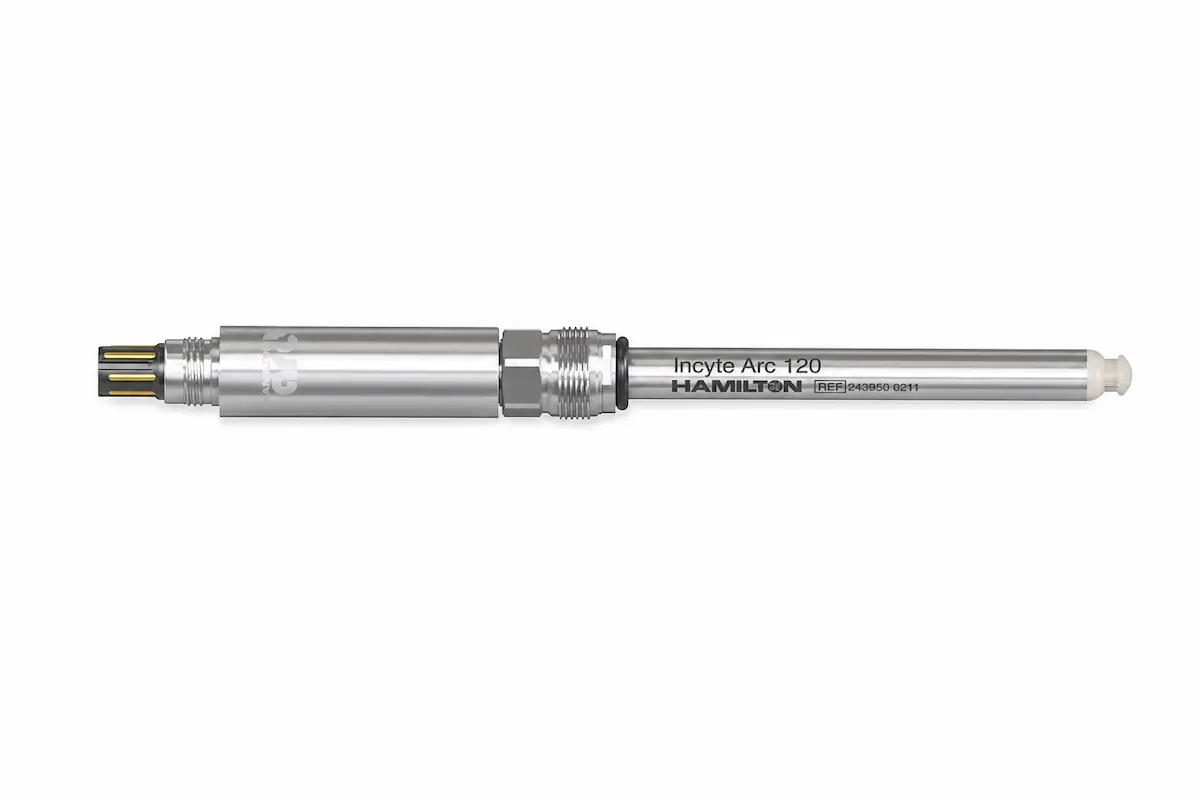
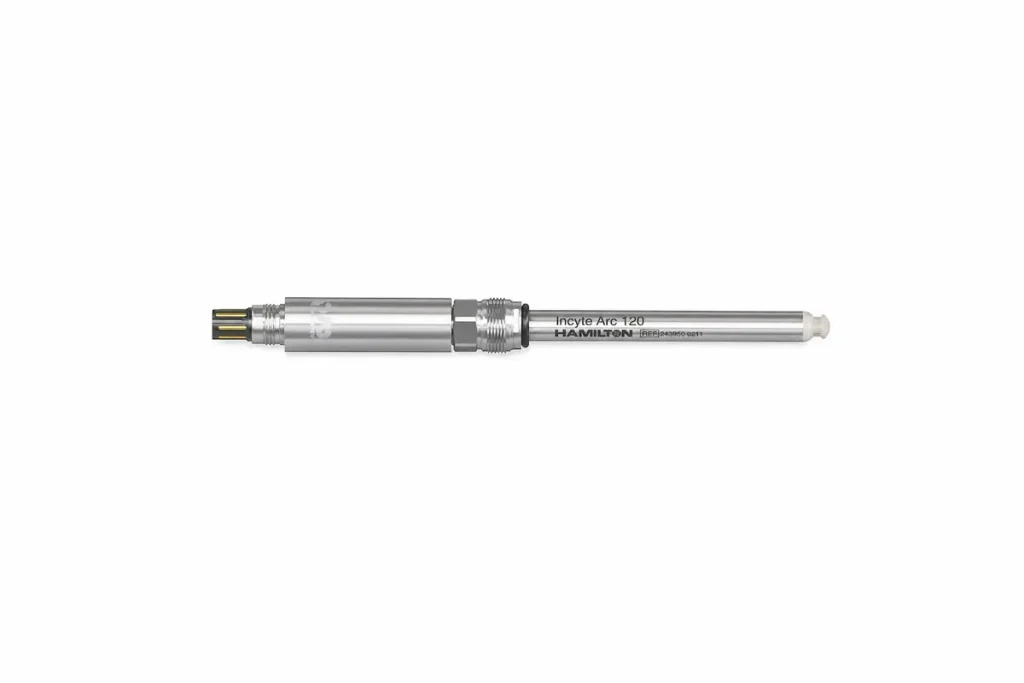
The Hamilton Incyte Arc is an intelligent capacitance sensor for real-time measurement of viable cell density (VCD) in cell culture bioprocesses. With an electrical permittivity range of 0–700 pF/cm (≈ 5×10⁵ to 8×10⁹ cells/mL) and an accuracy of ±1 pF or ±1%, the Incyte Arc detects only living cells with intact membranes —no cell debris, no aggregates, no dead biomass. The integrated Arc intelligence relocates the transmitter to the sensor head and connects natively via Modbus ARC to the Applikon controllers Livit Flex, ez2-Control, my-Control, and in-Control. It is autoclavable up to 140 °C, PAT-compatible, and available in four insertion lengths for any Applikon vessel format—from compact glass reactors to the BioPilot.

Inside the Hamilton Incyte Arc Sensor

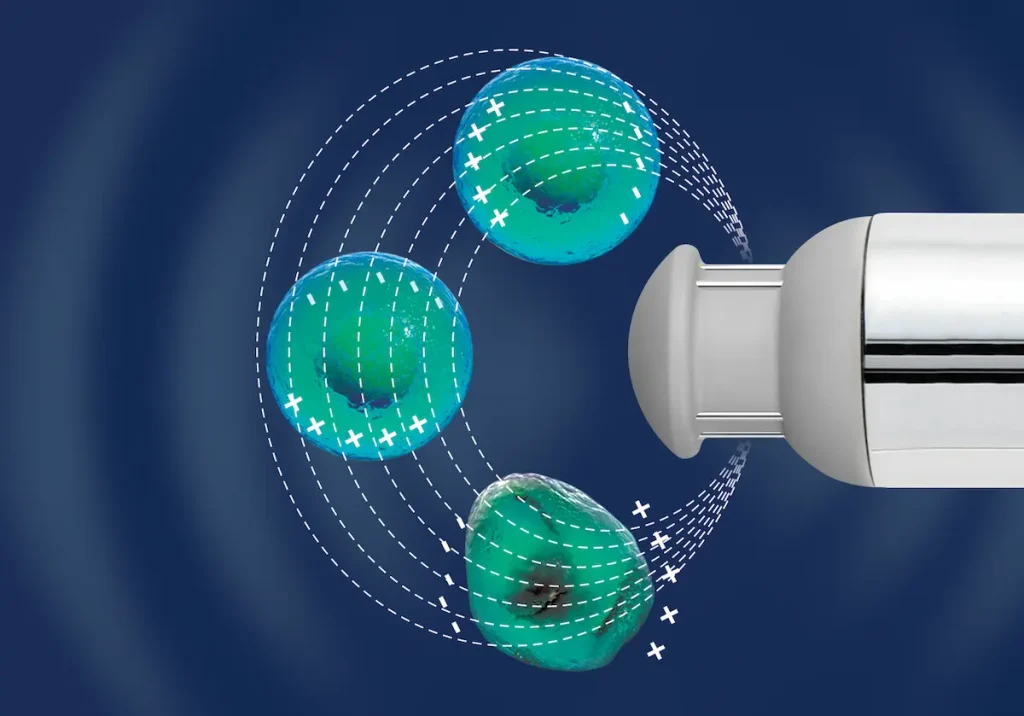
The Incyte Arc is a real-time live cell density sensor built on measuring electrical permittivity . Where optical turbidity sensors count every particle in the suspension—live cells, dead cells, aggregates, debris, and media particles all collapse into a single number—the Incyte Arc treats the bioreactor like a forest of microscopic capacitors: only cells with intact membranes polarize in the applied electric field, only intact membranes contribute to the measured permittivity, only living biomass appears in the reading. What you see on the controller is the metabolically active fraction of the culture—in real time, without sampling, without offline analysis. The measurement covers 0–700 pF/cm (≈ 5×10⁵ to 8×10⁹ cells/mL) with an accuracy of ±1 pF or ±1 % — a range wide enough to track a culture from inoculation to high-density harvest with a single sensor.

Built with Excellence and Experience

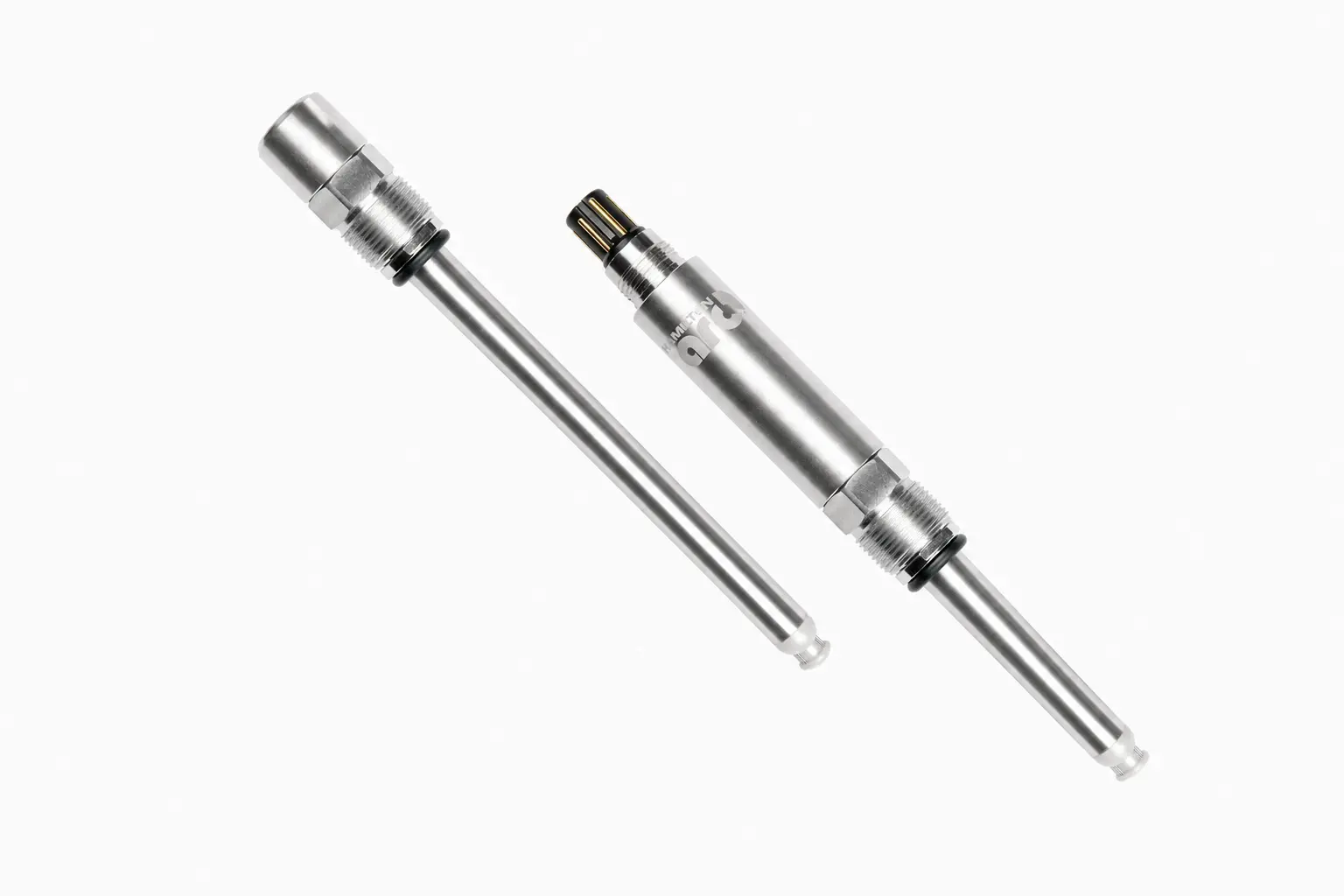
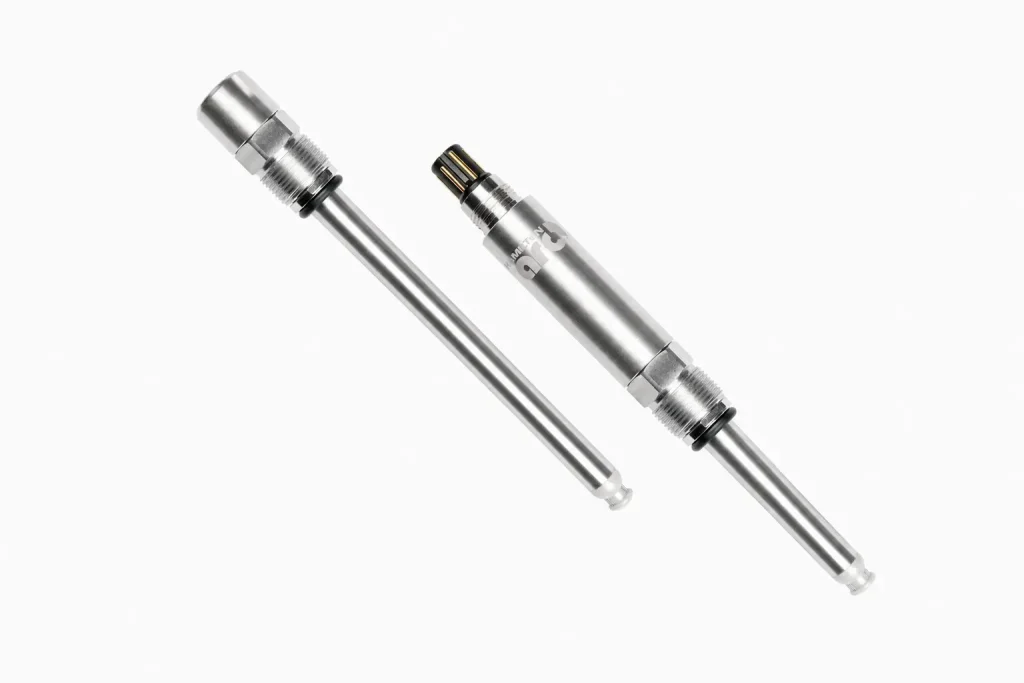
The Incyte Arc belongs to Hamilton’s Arc sensor family —the platform whose defining engineering decision is to integrate the transmitter into the sensor head. Microprocessor, calibration data, and signal conditioning are all housed within the Incyte Arc itself; the sensor communicates directly with the Applikon controller via Modbus ARC —no external transmitter, no signal converter box, no separate control cabinet. In practice: activate the Hamilton Arc driver in your Applikon controller, and the Incyte Arc is recognized upon connection and configurable via the familiar Applikon interface. Livit Flex, ez2-Control, my-Control, and in-Control natively support full Arc integration.

Ease of Setup with Advanced Process Control

The Incyte Arc is designed for Process Analytical Technology (PAT) workflows, which increasingly define both research and regulated production. Continuous in-line VCD measurement replaces offline counting, which used to be the bottleneck of every cell culture campaign—and because the Arc architecture eliminates the external transmitter, system complexity, and thus validation effort, is reduced. Autoclavable up to 140°C and suitable for repeated SIP cycles, the sensor moves between research, process development, and GMP transition without changing hardware. Compatible with Applikon glass autoclave bioreactors, AppliFlex ST single-use systems, BioBench stainless steel, and BioPilot pilot vessels—the Incyte Arc carries the same VCD signal across every scale a development pathway goes through.

Choose your Incyte Arc insertion length

The Incyte Arc is supplied in four insertion lengths covering every Applikon vessel format — and shares the same 12 mm diameter, PG 13.5 thread, VP8 connector and 140 °C autoclave rating across the entire range.

120 mm — small R&D

  1. 1 BioPilot stainless-steel bioreactor – pilot production and scale-up studies

225 mm — standard lab-scale

  1. 1 Standard Glass Autoclavable Bioreactor — process development on laboratory scale.
  2. 2 Benchtop systems.

325 mm — bench and single-use.

  1. 1 BioBench stainless-steel bioreactor — pilot-scale cell density monitoring.
  2. 2 AppliFlex ST single-use bioreactor — closed single-use integration.

425 mm — pilot and scale-up.

  1. 1 BioPilot stainless-steel bioreactor — pilot production and scale-up studies.
  2. 2 Larger pilot-scale vessels — scale-up campaigns.

The 12 mm probe diameter is consistent across the range. Unlike the EasyFerm Plus Arc, the Incyte Arc is offered in a MiniBio-compatible 120 mm length — viable cell density monitoring becomes available at the smallest screening scale.

Video Tutorials

Watch the Incyte ARC in action

From measurement principle to real-world deployment — see how the Hamilton Incyte ARC delivers real-time VCD data.

From measurement principle to real-world deployment — see how the Hamilton Incyte ARC delivers real-time VCD data.

Installing the Incyte ARC.

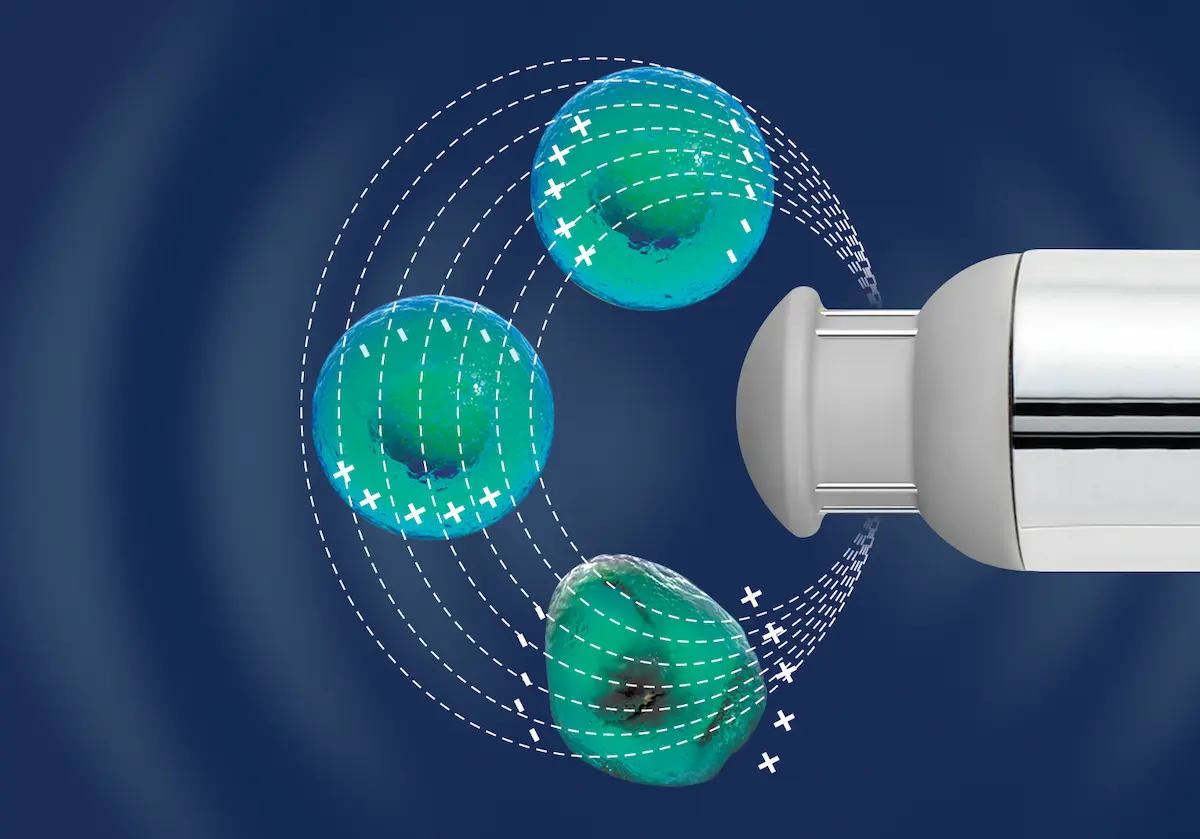
A living cell is a microscopic capacitor. The lipid bilayer of the membrane is an electrical insulator between two ionic conductor compartments — the cytoplasm inside and the culture medium outside. When an alternating-current field is applied to the suspension, intact cells polarise: charges accumulate on both sides of the membrane, the cell behaves like a capacitor, and the electrical permittivity of the suspension increases proportionally to the volume fraction of intact cells. Damaged or dead cells with leaky or ruptured membranes do not polarise — they are invisible to the measurement. Aggregates and debris without continuous membranes are equally invisible. Media particles are invisible. What remains — and what the Incyte Arc measures — is the vital, metabolically active biomass — precisely the only quantity that matters for feeding, growth rate and harvest decisions.

The practical consequence shows up in three places on the bench.
Feeding decisions become viable-cell-driven instead of total-biomass-driven — a feed rate calibrated against optical density or sampling-based counts overshoots when dead-cell debris accumulates; the Incyte Arc keeps the feed locked to live biomass through that drift.
Harvest timing becomes a single threshold-cross event instead of an inference from offline sample trends — the moment the viable signal plateaus or inflects, the harvest call is in real time, not three hours after the last sample.
Long-campaign aggregation behaviour, which compromises optical density measurements in mammalian and stem-cell expansion runs, simply doesn’t enter the signal — aggregates without continuous membranes are physically invisible to the sensor, so the VCD curve stays clean across runs where OD goes noisy. The measurement principle isn’t just a different technology — it’s a different operational profile.

Hamilton Incyte Arc Cell Density Sensor

Arc Intelligence — the transmitter in the sensor.

Traditional cell density measurement requires an external transmitter to receive the raw sensor signal, process it, apply calibration and output a controller-readable value. Hamilton’s Arc technology integrates all of that functionality into the sensor head as an integrated microprocessor. The implications run through every part of the workflow: calibration data and run history travel with the sensor when it changes vessels — instead of residing in the transmitter channel; integration with the Applikon controller is a single driver activation instead of a separate control cabinet and signal cabling; and sensor diagnostics appear directly on the Applikon interface, without a second software stack.

For a regulated laboratory that moves sensors between bioreactors, Arc transforms sensor swaps from validation events into routine operations. Calibration history stored on the sensor itself becomes an audit-trail-ready record the moment the sensor connects to a new controller — no manual recalibration log, no missing-data window between runs. ArcAir — Hamilton’s sensor management software — reads the same on-board record for fleet-wide diagnostics, predictive replacement signalling and dual-frequency mode monitoring, so a lab with eight Incyte Arc sensors across a parallel pilot platform sees sensor health, calibration status and predicted service intervals on a single dashboard. The combined effect: less bench downtime for calibration cycles, fewer GxP exceptions to write up, and a sensor that quietly tells you what it needs instead of waiting to fail.

Hamilton Incyte Arc Cell Density Sensor
Process Guidance

What is the Incyte Arc workflow?

The Incyte Arc workflow runs across three phases.
Install. Enable the Hamilton Arc driver in your Applikon controller — Livit Flex, ez2-Control, my-Control or in-Control — and select the insertion length matching your vessel (120 mm for MiniBio and compact Applikon Autoclavable Glass Bioreactor, 225 mm for standard Applikon Autoclavable Glass Bioreactor and benchtop systems, 325 mm for BioBench and AppliFlex ST, 425 mm for BioPilot). Install through the standard PG 13.5 sensor port using the VP8 connector. The controller auto-detects the sensor on connection.

Calibrate. Two-point calibration against your media establishes the working biomass signal. The calibration is stored in the sensor’s on-board memory, so the Incyte Arc can be moved between vessels of the same type without recalibration. Calibration history flows back into ArcAir — Hamilton’s sensor management software — for fleet-wide review and audit-trail logging.

Operate. Autoclave the sensor in situ at up to 140 °C — the integrated Arc electronics are designed for repeated SIP cycles. Once cultivation starts, the sensor measures viable cell density continuously across 0–700 pF/cm — only living cells with intact membranes contribute to the signal, so debris, dead cells and aggregates are filtered out by the measurement principle itself. Pass the VCD signal to Lucullus PIMS environment for the data management layer.

Why teams choose the Incyte ARC

  • Measures only viable cells — capacitance-based measurement principle that filters out debris, dead cells and aggregates by physics, not by post-processing.
  •  Real-time viable cell density — continuous measurement across 0–700 pF/cm (≈ 5×10⁵ to 8×10⁹ cells/mL), with ± 1 pF or ± 1 % accuracy.
  • Arc Intelligence on board — integrated microprocessor replaces the external transmitter, with calibration history and configuration data stored in the sensor itself and migrating with it between vessels.
  • ArcAir sensor management — fleet-wide calibration history, sensor health monitoring and audit-trail-ready diagnostics.
  • Across the full Applikon vessel range — four insertion lengths (120 / 225 / 325 / 425 mm) covering MiniBio through to BioPilot pilot scale, with PG 13.5 thread and 12 mm diameter consistent across the range.
  •  PAT-compatible and GMP-transfer-ready — autoclavable to 140 °C, SIP-tolerant, with the documentation lineage regulated workflows require.

Spec your Incyte Arc with Resea Biotec

The Hamilton Incyte Arc is the live cell density sensor most cell-culture labs choose when offline counting becomes a bottleneck. Capacitance-based measurement reads only living cells with intact membranes — debris, dead cells and aggregates filtered out by the measurement principle itself. Arc Intelligence places the transmitter inside the sensor body, with calibration history stored on-board and ArcAir diagnostics across the fleet. Available in four insertion lengths (120 / 225 / 325 / 425 mm) covering Applikon MiniBio at small-scale screening through to BioPilot at pilot scale, with native integration on every Applikon controller in the Resea range.

A cell density sensor rarely changes a process on its own — it changes the workflow around it. Real-time VCD turns feeding strategies from sampling-based inferences into closed-loop control, harvest timing from offline-counting infrastructure into a single threshold-cross event, and bench operator time from sampling-and-analysis cycles into actual process supervision. Resea Biotec is Switzerland’s official Applikon distributor and certified service partner — based in Recherswil, supporting customers across Switzerland with local technical support and on-site service.

Talk to our team and we’ll spec the right Incyte Arc insertion length for your vessel, plan the Arc driver activation across your existing controller fleet, coordinate ArcAir deployment and sensor-management workflow setup, and stay on hand for application advice and maintenance support throughout the sensor’s life. Whether you’re moving a CHO process off offline counting, building out a parallel-pilot mammalian screening platform with fleet-wide VCD visibility, or extending biomass sensing into stem-cell expansion campaigns — we’ll help you spec the right combination end to end.

Contact us
Hamilton Incyte Arc Cell Density Sensor
Resources

Incyte Arc datasheet & technical resources

Product specifications, measurement principle, ArcAir integration and process applications for the Hamilton Incyte Arc viable cell density sensor — alongside the complementary Dencytee Arc total cell density sensor.

Hamilton Incyte Arc & Dencytee Arc — Cell density sensor brochure.

Hamilton’s combined product brochure for the Incyte Arc (viable cell density, capacitance-based) and Dencytee Arc (total cell density, NIR turbidity) cell density sensors. Covers measurement principles, applications for mammalian cell culture, fermentation, perfusion, and cultivated meat, plus ArcAir® software integration and process connectivity.

PDF • 1.8 MB
Download

Featured more products

CTA Background

Looking for the Right Bioprocess Solution?

Our specialists support you throughout the entire bioprocess lifecycle — from system selection and application design to implementation, optimization, and long-term operation. We work closely with you to ensure reliable, compliant, and scalable solutions tailored to your requirements.

Talk to Our Experts
Contact Form EN