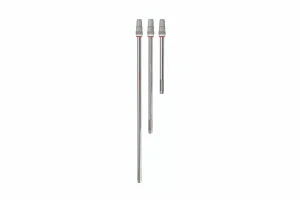
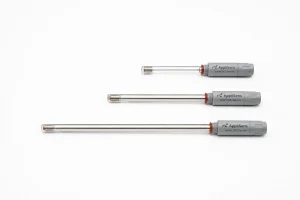
Hamilton VisiFerm DO₂ Arc Sensor – Optical Dissolved Oxygen Sensor with Luminescence Quenching

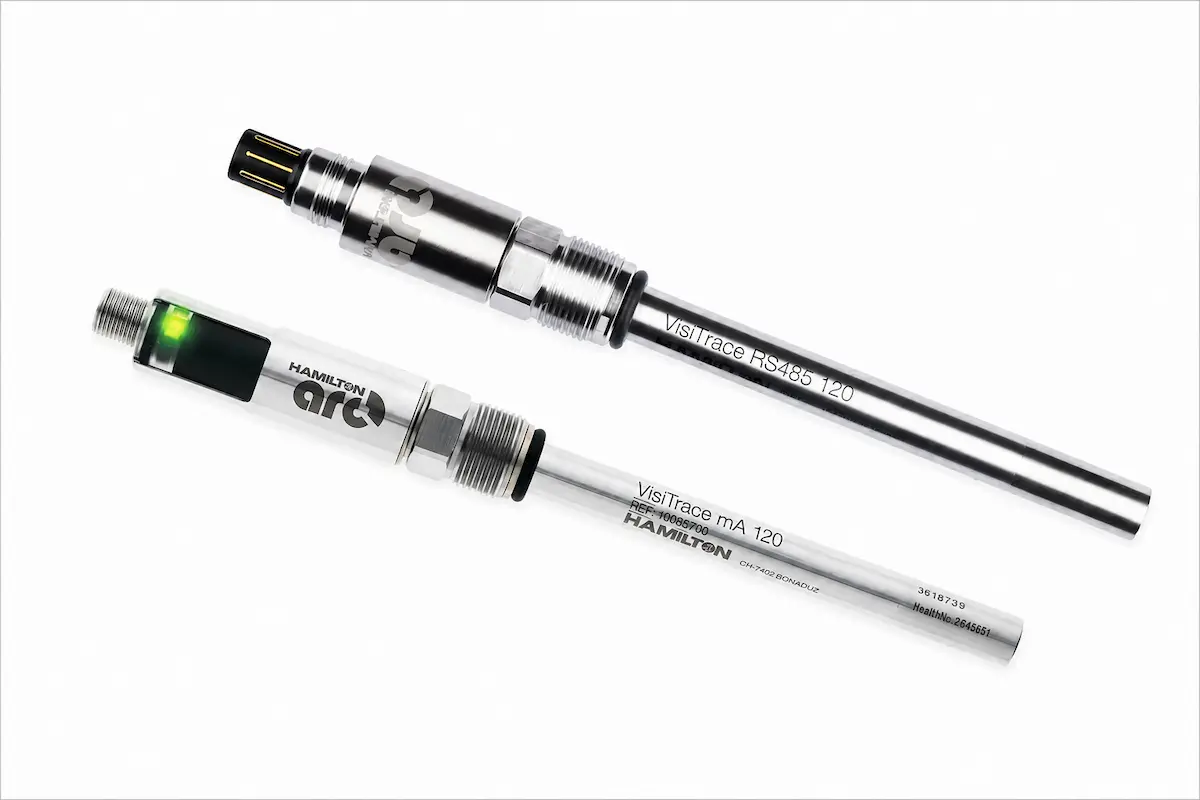
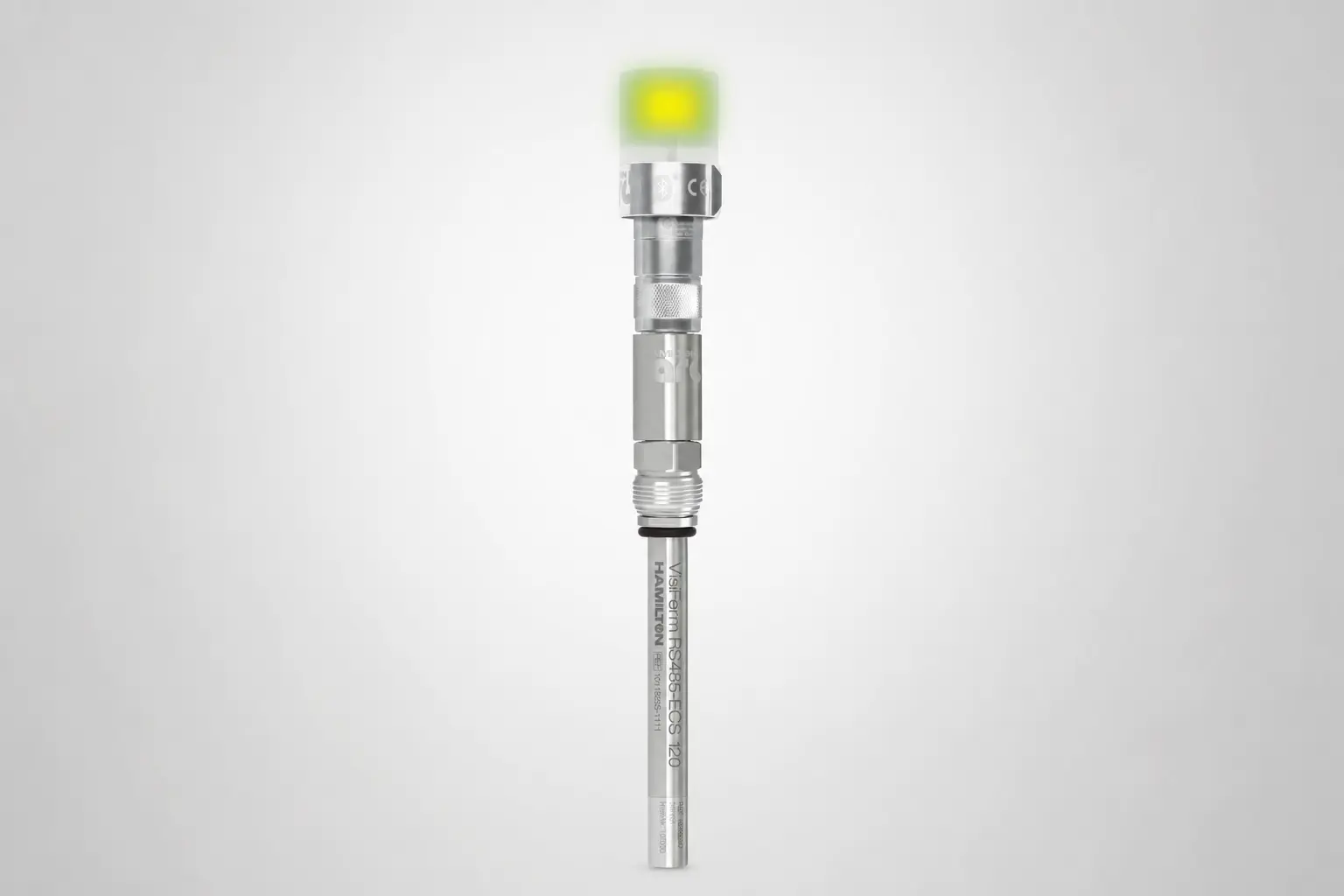
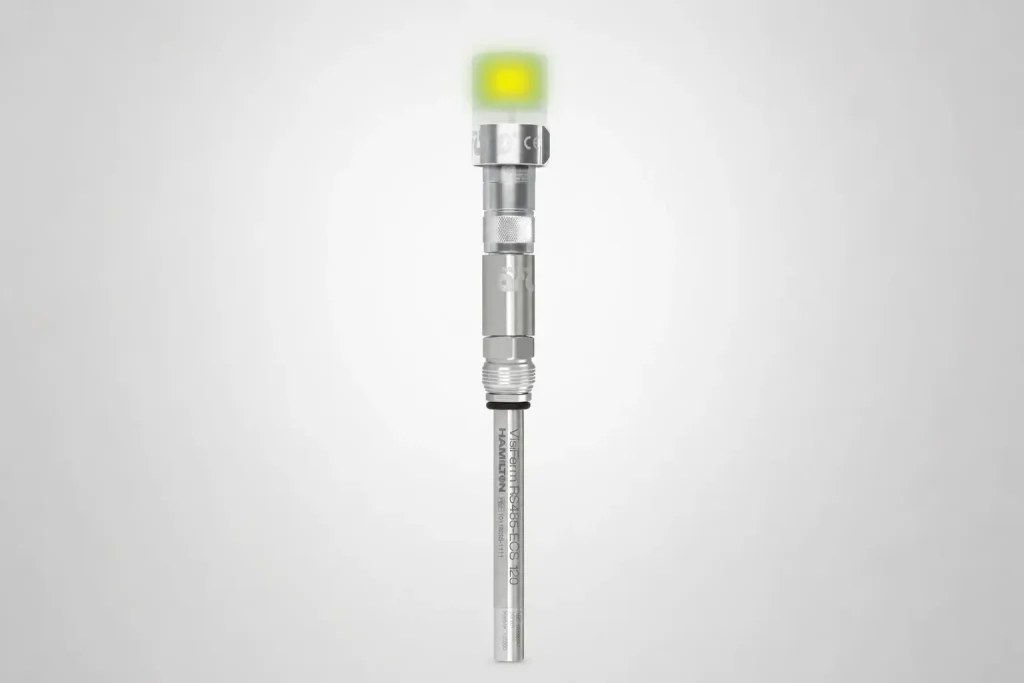
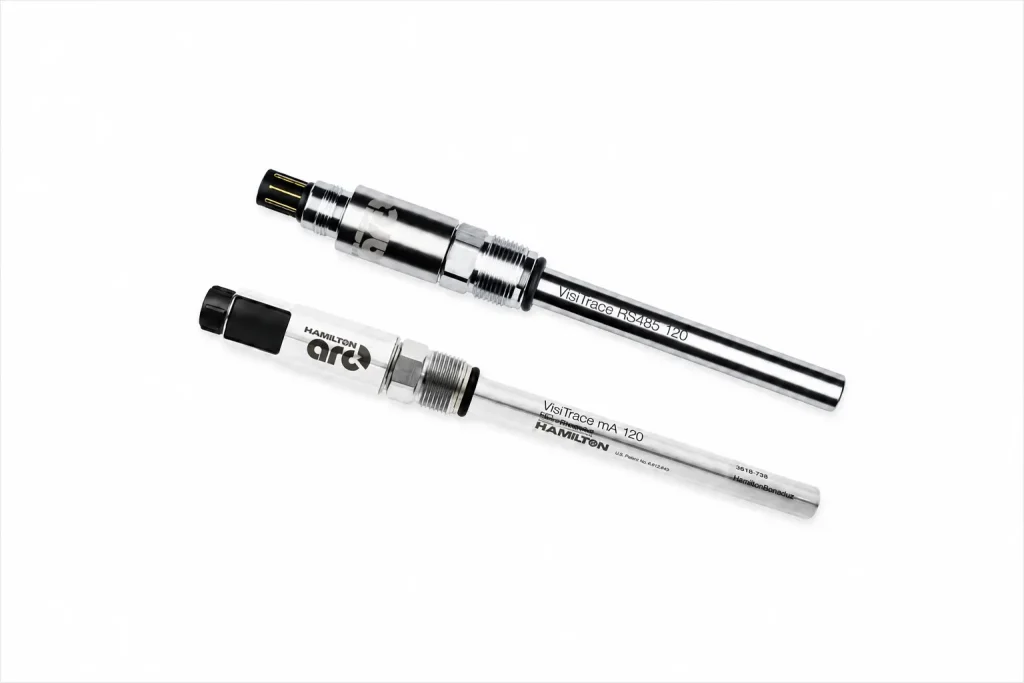
The Hamilton VisiFerm DO₂ is an optical dissolved oxygen sensor with built-in Arc intelligence —the microprocessor integrated into the sensor head replaces the external transmitter still required for conventional DO measurement. A blue-light luminophore reads the dissolved oxygen via luminescence quenching, without electrolyte leaching into the process, without flow dependency, and a quality indicator on the sensor cap shows when maintenance is actually required. Bluetooth-enabled (VisiFerm mA / VisiTrace mA) or RS485 with Arc Wi adapter, fully compatible with the Applikon controllers Livit Flex, ez2-Control, my-Control, in-Control, and SUB-Control One.

The Hamilton VisiFerm DO₂ Arc Sensor in detail.

The VisiFerm DO₂ is the dissolved oxygen optical working tool of the Hamilton Arc sensor family. The sensor head contains an oxygen-sensitive luminophore: blue light excites the molecule, which returns to its ground state and emits red light—and oxygen in the medium quenches part of this energy transfer. The DO measurement is the ratio between excitation (blue) and emission (red)—fast, clean, and free from the electrolyte chemistry that characterizes polarographic alternatives. Arc Intelligence brings the other half of the story: a microprocessor integrated directly into the sensor body replaces the external transmitter, so calibration data, run history, and configuration remain with the sensor at all times. The sensor reads via either 4–20 mA, Modbus RTU, or digital protocols—depending on the configuration.

Experience and quality in every detail.

The VisiFerm DO₂ is developed by Hamilton Process Analytics —the global reference provider of industrial process sensors for pharmaceuticals, food, brewing, and biotechnology, with decades of proven performance in regulated and unregulated environments. The reason VisiFerm appears throughout the Applikon catalog is its design-level integration: the Applikon controllers Livit Flex, ez2-Control, my-Control, in-Control, and SUB-Control One natively support full Hamilton Arc sensor connectivity. Activate the Arc driver in the controller software, connect the sensor, and configuration, calibration, and troubleshooting are all handled through the familiar Applikon interface—no second software stack, no separate transmitter cabinet, no integration project.

 Easy operation with professional process control.

Optical dissolved oxygen measurement is not just a different technology — it’s a different operating profile. The VisiFerm DO₂ inherits seven specific advantages from the optical principle. It is insensitive to CO₂ fouling, a common failure mode of polarographic DO probes in high-cell-density mammalian cultures, and insensitive to poisons such as H₂S and ammonia, relevant for fermentation chemistry that historically required dedicated probes. Maintenance comes down to a single spare part — removing the cap and putting it back on, rather than rebuilding an electrochemical unit. There is no electrolyte that could contaminate the process, relevant for regulated and high-purity workflows, and measurement is flow-independent, so values remain precise whether stirring is high, low or paused. The probe is stable against pressure surges, surviving autoclaving and SIP cycles without calibration drift, and supports invertible installation, opening up vessel geometries that polarographic probes cannot serve.

For high-cell-density cell cultures, demanding fermentation broths, single-use bioreactors, autoclavable laboratory vessels and continuous perfusion processes, the VisiFerm DO₂ eliminates most of the recurring DO-probe problems that the polarographic generation has made operators accustomed to.

One sensor across the Applikon family

The VisiFerm DO₂ is sized and supported to read into every Applikon bioreactor and controller in the Resea Biotec range.

At lab scale.

  1. 1 MiniBio Bioreactor (250 mL – 1 L) for screening.
  2. 2 Applikon Autoclavable Glass Bioreactor (2 – 20 L) for process development.
  3. 3 AppliFlex ST (500 mL – 15 L) single-use stirred-tank.

At bench and pilot scale.

  1. 1 BioBench (20 – 30 L) for cGMP-grade development.
  2. 2 BioPilot (30 – 270 L) for clinical and small-commercial production.

The same VisiFerm DO₂ probe body reads into every Applikon controller in our range — Livit Flex, ez2-Control, my-Control and in-Control — over the Arc protocol. Process knowledge built at the bench transfers cleanly upward through the Applikon family without changing the sensor SKU, and the on-board calibration history travels with the probe between every vessel transfer.

How optical dissolved oxygen measurement actually works.

The sensor element inside the VisiFerm DO₂ is an oxygen-sensitive luminophore—a fluorescent dye that reacts to molecular oxygen. The measurement workflow occurs in three steps. First, an LED in the sensor body emits blue light , which excites the luminophore. Second, the excited molecule relaxes to its ground state, emitting red light . Third, oxygen in the medium absorbs some of the energy that would otherwise be emitted as red light—the more oxygen, the less red light reaches the detector. The DO measurement is the ratio between excitation light (blue) and emitted light (red). The luminophore requires no equilibration time before use, no maintenance of electrolyte chemistry, and no flow across the sensor surface to provide an accurate measurement. That’s the whole principle—and the reason why every operational advantage of optical DO measurement stems from it.

Hamilton VisiFerm DO₂ Arc Sensor

Arc Intelligence — the transmitter in the sensor

Traditional DO sensors require an external transmitter to translate the raw electrochemical or optical signal into a controller-readable output, calibrate the reaction curve, and store the configuration. Hamilton’s Arc technology integrates this transmitter into the sensor body as an onboard microprocessor. The implications extend to every part of the workflow: calibration data and run history travel with the sensor when it changes vessels; sensor diagnostics appear directly on the Applikon controller interface, without a second software stack; and the configuration is sensor-specific rather than transmitter-channel-specific. For a regulated laboratory that moves sensors between bioreactors, this is the difference between a fresh validation for each change and a consistent protocol for each sensor.

Hamilton VisiFerm DO₂
WORKFLOW

What is the VisiFerm DO₂ workflow?

The VisiFerm DO₂ workflow runs across three phases.

Install. Enable the Hamilton Arc driver in your Applikon controller — Livit Flex, ez2-Control, my-Control, in-Control or SUB-Control One — and connect the sensor: direct cable, Bluetooth (on the VisiFerm mA and VisiTrace mA variants), or RS485 with the optional Arc Wi adapter. The controller detects the sensor automatically and reads its full configuration through the Arc protocol; the same install path works whether the sensor is going into an Applikon Autoclavable Glass Bioreactor, a stainless-steel BioBench or BioPilot, or a single-use AppliFlex ST with the ODO sensor cap variant.

Calibrate. The sensor’s calibration history travels with it through every transfer between vessels, so calibration is required only when the cap quality indicator on the sensor signals it, or before a regulated run where the protocol mandates a fresh calibration cycle. Calibration data flows back into ArcAir — Hamilton’s sensor management software — for fleet-wide review and audit-trail logging.

Operate. Live DO values, calibration history and sensor health display on the controller’s standard interface. The optical measurement principle handles the operating conditions where polarographic DO probes fail: changing stirring rates, pressure peaks during autoclaving or SIP, CO₂ accumulation in high-density cultures, and process exposure to H₂S or ammonia. Replace the cap when the quality indicator calls for it — no electrolyte change, no probe rebuild, no calibration drift on the sensor body itself.

Why use the VisiFerm DO₂?

  • Optical measurement principle — luminescence quenching with no electrolyte and no flow dependence, removing the recurring failure modes of polarographic DO probes.
  • Arc Intelligence on board — integrated microprocessor replaces the external transmitter, with calibration history and configuration data stored in the sensor itself and migrating with it between vessels.
  • Cap-based maintenance — a single spare part, condition-based replacement signalled by the on-cap quality indicator, no electrochemical rebuild required.
  • Multi-protocol connectivity — 4-20 mA, Modbus RTU and digital outputs supported; Bluetooth on VisiFerm mA / VisiTrace mA, or RS485 via Arc Wi adapter for wireless diagnostics.
  • ArcAir sensor management — fleet-wide calibration history, sensor health monitoring, predictive cap-replacement signals and audit-trail-ready diagnostics.
  • Lab-to-production scale span — process development through to production across <100 mL to >100 L, on reusable autoclavable vessels and single-use bioreactors alike.

Spec your VisiFerm DO₂ with Resea Biotec 

The Hamilton VisiFerm DO₂ Arc Sensor is the optical dissolved oxygen probe most labs move to once polarographic alternatives start to drag on the workflow. Built on a fully optical DO principle, enhanced with Arc Intelligence that integrates the transmitter into the sensor and stores calibration history on board. Natively supported across the full Applikon controller range — Livit Flex, ez2-Control, my-Control, in-Control and SUB-Control One — and pairs with both reusable Applikon vessels and the AppliFlex ST single-use range through the interchangeable ODO sensor cap.

A sensor is rarely a standalone purchase — it lands inside an existing controller fleet, an existing vessel stack and an existing calibration regime, and the integration work is what determines whether the upgrade actually delivers. Resea Biotec is Switzerland’s official Applikon distributor and certified service partner — based in Recherswil, supporting customers across Switzerland with local technical support and on-site service.

Talk to our team and we’ll spec the appropriate VisiFerm DO₂ variant — mA, RS485, or ODO Cap for single-use — plan the Arc driver activation across your existing controller fleet, coordinate ArcAir deployment and sensor-management workflow setup where required, and stay on hand for application advice, cap supply and maintenance support throughout the sensor’s life. Whether you’re moving an established workflow off polarographic, building a single-use line on AppliFlex ST that needs the ODO Cap variant, or extending sensor coverage across a pilot or production-scale fleet — we’ll help you get there.

Contact us
Hamilton VisiFerm DO₂ Arc Sensor
Resources

Hamilton VisiFerm DO₂ documentation.

Product specifications, sensor-variant comparison and ArcAir integration details for the Hamilton VisiFerm DO₂ optical dissolved oxygen sensor.

Hamilton VisiFerm DO₂ — Optical DO sensor datasheet.

Complete technical specifications for the Hamilton VisiFerm DO₂ optical dissolved oxygen sensor — measurement principle (optical luminescence quenching), measurement range and accuracy, insertion-length variants (120 / 225 / 325 / 425 mm), thread and connector specifications, ODO Cap single-use options, ArcAir software integration and Arc-protocol controller compatibility.

PDF • 3.8 MB
Download
CTA Background

Looking for the Right Bioprocess Solution?

Our specialists support you throughout the entire bioprocess lifecycle — from system selection and application design to implementation, optimization, and long-term operation. We work closely with you to ensure reliable, compliant, and scalable solutions tailored to your requirements.

Talk to Our Experts
Contact Form EN